Best Ways to Experience Aspen on Foot

Image: Shutterstock
Aspen is world famous as an adventure destination, sure, but one of the best ways to get to know a new place (and even a familiar one) is to walk it. Not grind it out on a steep uphill or trek for miles through the forest—appealing as those may be—but just put one foot in front of the other and simply…stroll. Whether your goal is learning more about the backstory of this town, spotting plants or animals or distant peaks, chatting with strangers (and making new friends), or admiring art, we’ve compiled a summer’s itinerary of worthwhile walkabouts. Now get out and explore at a leisurely pace.
Nature Tours | Wildflower Walks | Wildlife Walks | History Walks
Ancient History Walks | Art Walks | Essential Strolls

Image: Courtesy ACES
Nature Tours
The Aspen Center for Environmental Studies (ACES), a nonproft that advocates for environmental responsibility via hands-on education, offers free nature-focused, naturalist-guided tours (through Sept 7) that are about a mile round trip. The tour at Maroon Lake begins at the visitor center (daily at 10 a.m. and 1 p.m.) and follows the shoreline walking path to Maroon Creek, all in the shadow of the Maroon Bells—the pair of 14,000-plus-foot peaks at the head of the valley. Along the way, learn about the area’s distinctive geology, trees and wildflowers, wildlife, and more.
Tours at the top of Aspen Mountain start near the Silver Queen gondola (daily on the hour from 11 a.m. to 3 p.m. during summer operations; free with purchase of gondola sightseeing ticket) and venture out along adjoining Richmond Ridge. Your ACES guide will highlight flora and fauna as well as the area’s mining history. A highlight: the panoramic vista at the walk’s turnaround point of the Elk Mountains, Independence Pass, and the Roaring Fork Valley.
If you prefer to take in nature at your own pace, stroll through wetlands and meadows along the half-mile loop trail at ACES’s Hallam Lake nature preserve, just north of Aspen’s downtown core. Bring binoculars and keep an eye (and ears) out for birds like ospreys, great blue herons, and kingfishers, as well as ducks and, occasionally, mule deer. Plus, Monday through Saturday at 2 p.m. ($10 per family, through Sept 7; registration required), the birds of prey show introduces onlookers to ACES’s resident red-tailed hawk, golden eagle, and great horned owl, who live in a lakeside enclosure.

Forest Bathing
The Japanese practice of forest bathing encourages immersion in nature through slow, mindful walking that engages all of your senses. Combine it with a meditative outdoor sound bath—where an instructor creates stress-reducing vibrations by playing singing bowls, gongs, and chimes—and any tension will disappear quicker than a hundred-dollar bill in a local restaurant. Megan DiSabatino, a skilled sound-bath facilitator, leads twice-monthly sessions ($30; registration required) through ACES. One takes place at ACES’s Hallam Lake preserve in town, the other at the Catto Center at Toklat in the gorgeous Castle Creek Valley.

Wildflower Walks
You don’t have to tackle a difficult hike to see some of the area’s exceptional wildflowers. ACES runs free wildflower walks in Snowmass Village (daily at 10 a.m., through Sept 7). The two-hour, 3.5-mile round-trip tours start at the pavilion on the Snowmass Mall and follow the Nature Trail, gaining 400 feet in elevation on a very gentle ascent. Your naturalist guide will point out flowers like giant angelica, cow parsnip, twisted stalk, corn lily, northern paintbrush, larkspur, monkshood, and more—plenty of species with which to impress friends or family with your expanded flower vocabulary. New this summer, ACES offers seasonal plant walks, with focused themes like roots and shoots, berries, and seeds; check the website for details.
Snowmass Village just published a new, free resource to identify plants and flowers (as well as birds and mammals) as you walk around the area. The Snowmass Field Guide includes photos and brief descriptions of almost a hundred species, along with fun facts and information on where you’re most apt to find specific plants. Pick one up at the guest services desk on the Snowmass Mall, at the Town Park bus station, or at select hotels.
Wildlife Walks
Know a red-breasted nuthatch from a ruby-crowned kinglet? Or a yellow-rumped warbler from a black-headed grosbeak? Learn more about these birds and many others through birding outings with ACES that involve easy walks with plenty of stops to listen and look. The three-hour outings ($25; registration required) take place every Tuesday morning (through Sept 22), alternating between the nonprofit’s Hallam Lake preserve and Rock Bottom Ranch in Basalt. Additional one-off birding sessions take place throughout the summer; check aspennature.org for up-to-date info.
Early evening is a particularly quiet, magical time at Hallam Lake. Even more special is experiencing it on ACES’s hour-long sunset beaver walks ($10 per family, Tuesdays and Wednesdays, 7:30 p.m. through Aug 26; registration required)—you’ll have a good chance of spotting members of the lake’s two beaver families as they swim or slap their tails on the water. Listen for the hooting of owls too, and watch for bats flying overhead.
History Walks
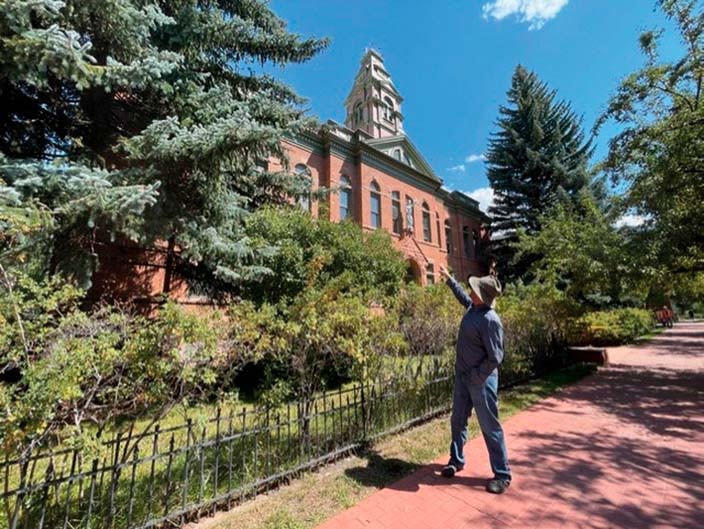
Hearing stories about days gone by and putting your surroundings in perspective adds relevance to any walk. And thanks to its rich history, Aspen is an excellent place to do just that. The Aspen Historical Society (AHS) offers a variety of guided tours, with two in particular that are walking-focused ($25 for adults, free for under 18 with an adult). On the Eras of Aspen Downtown History Tour (Mondays, Wednesdays, and Fridays, 10:30 a.m.), an AHS docent delivers a compelling overview of notable buildings and sites as you stroll through the town’s downtown core for an hour and a half, then wrap up at the magnificent Hotel Jerome, opened in 1889. Meanwhile, on the one-and-a-half-hour Neighborhood History Tour through Aspen’s West End (Tuesdays and Thursdays, 10:30 a.m.), you’ll learn about the Ute Indians who frequented the area, long-disappeared attractions like a race track (horses, then cars) and rodeo grounds, and Aspen’s changing architectural styles. Plus, the tour gives you a chance to ogle the many stunning homes with immaculate gardens in Aspen’s toniest leafy hood.
Some 11 miles south of Aspen in the Castle Creek Valley, the Ashcroft ghost town ($5 entrance fee) offers a glimpse into the height of the mining boom, when this settlement rivaled Aspen in number of residents and amount of activity (when Ashcroft’s summer population peaked at 2,500 in the early 1880s, the town boasted two newspapers, two grocery stores, a school, a smelter, sawmills, and supposedly 20 saloons). Today, only a few shored-up buildings remain; walk among them on a well-graded path and try to imagine all the hubbub that once took place here—the only noise you’ll hear these days is the rustling of the aspen trees that border the meadow. Take a self-guided tour thanks to recently updated interpretive signs outside many of the buildings; an AHS docent is also on site from 10 a.m. to 5 p.m. daily. (Note that dogs are not allowed at Ashcroft.)
Dean Weiler of Dean’s Aspen Tours hosts several history tours ($40 per adult, $30 ages 7–17, free six and under), including Aspen Past to Present, Highlights of Aspen, and Off the Beaten Path. Especially popular is Weiler’s Aspen Darkside Ghost Tour, which starts at 8 p.m. and brings to life some of the town’s most haunted places.

Ancient History Walks
In October 2010, a bulldozer operator working on the expansion of Snowmass Village’s Ziegler Reservoir dug up a Columbian mammoth tusk. Work stopped for the next 10 months while scientists investigated. They ended up unearthing thousands of Ice Age relics in what is now recognized as one of Colorado’s most significant fossil finds. A trio of family-friendly walks provides more information about this fascinating discovery.
ACES’s free Ice Age Discovery Tour (daily at 1 p.m., through Sept 7 ) provides a more rugged walk, using the Nature Trail, somewhat near Ziegler Reservoir, as the setting for storytelling by a naturalist about the dig. The tour lasts two hours and covers 3.5 miles round trip, with a very gradual elevation gain of 400 feet. aspennature.org
If you’re a DIY type, pick up an Ice Age Discovery Passport (at the guest services desk on the Snowmass Mall or at the Town Park bus station) for a self-guided walk that follows the route of the science center tour below. The passport details three art installations and illustrates some other factoids. Get your passport stamped at different locations, then turn it in at a guest services desk for a prize.
On the Aspen Science Center’s free Ice Age Explorer Tour (Fridays, 3:30 p.m.), an educator leads a show-and-tell with replicas of prehistoric fossils found in the reservoir—mastodons, giant ground sloths, camels—with more details on the dig. With the guide’s help, kids then complete their Ice Age Discovery Passport by stopping at several art installations and interpretive exhibits in Base Village and on the Snowmass Mall on the 90-minute walk.

Art Walks
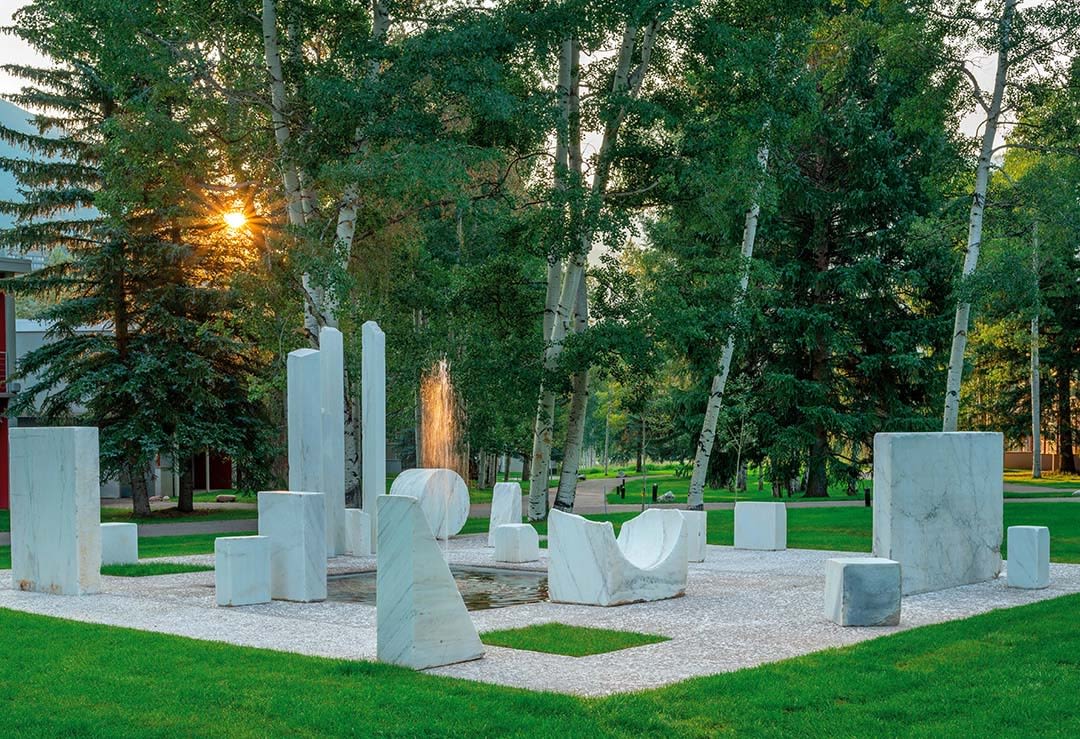
It’s hard to beat the Aspen Institute for a summertime stroll, especially if you’re an art lover. Designed by Bauhaus artist and architect Herbert Bayer between 1953 and 1973, the 40-acre campus exemplifies the aesthetics promoted by the German modernist design school and further refined by Bayer: functionality, minimalism, and a reverence for nature. In addition to the buildings—intended to complement the mountain landscape by bringing the outdoors in—the institute’s grounds serve as part sculpture garden and part nature trail, all connected by meandering paved pathways. The Aspen Music Festival and School’s Klein Music Tent and Harris Hall, as well as the Aspen Institute of Physics, abut the campus’s east side. Here, look for the tucked-away Sage Mountain Sky, a small gem of a Japanese garden designed in 1994 to honor a former Institute trustee. With the mountains in the background and water features, it really does inspire contemplation. aspeninstitute.org
One of the best ways to explore the grounds is on a free hour-long tour with Aspen landscape architect Ann Mullins (every other Wed at 11 a.m., May 27–Oct 7, except June 17 and Aug 19). Starting at the Doerr-Hosier Center on the campus’s west side and walking east, you’ll learn more about Bayer’s signature installations, including the innovative Grass Mound earthwork, the Marble Garden, and the sgraffito mural.
Or take a self-guided art tour around the institute. Look for placards outside buildings or by art installations; they feature QR codes that allow smartphones to access a pair of digital audio guides—one focused on art around the campus, the other on history. Through the art guide, you’ll hear about pieces like Bayer’s colorful kaleidoscreen and Andy Goldsworthy’s sinuous Stone River. The history guide highlights sites like the Buckminster Fuller dome and the Bayer Center, a gallery and research facility that honors its namesake’s legacy.
On the last Thursday of June, July, and August, the free Aspen Art Walk (5–9 p.m.) makes ogling art a communal event. About a dozen galleries throughout downtown Aspen usually participate, keeping their doors open late for browsing. Aspen Collective (213 S Mill St), Hexton Gallery (447 E Cooper Ave), and Galerie Maximillian (602 E Cooper Ave) anchor the walks. At 7 p.m., one gallery will host a talk by a visiting or local artist.
Three Essential Strolls
Rio Grande Trail
The 42-mile, mostly paved trail from Aspen to Glenwood Springs follows the former railbed of the old Denver and Rio Grande Western Railroad, much of it along the Roaring Fork River. From Aspen, pick up the trail from Puppy Smith Street and walk downriver to Stein Park for a lovely riverside saunter of about two miles. Or head upriver to the John Denver Sanctuary, where the sound of water flowing, colorful flowers, and a circle of boulders etched with lyrics are as soothing as the late musician’s songs.
East of Aspen Trail
Amble along the northern boundary of the North Star Nature Preserve, as well as the Roaring Fork River, on this 3-mile flat gravel trail east of downtown. Amid a backdrop of views to Independence Pass, look for ospreys, beavers, and the ubiquitous stand-up paddleboarders.
Owl Creek Trail
This 5.75-mile paved path descends from the intersection of Brush Creek and Owl Creek roads to Buttermilk ski area, losing more than 750 feet in elevation. A particularly scenic section traverses near aspen groves and ranch land east of Two Creeks Road.