Dine Super Local in Aspen

Image: Jake Wheeler
Those seeking the original Aspen experience (Walter Paepcke famously dubbed it “The Aspen Idea") can find its essence distilled and ingrained in locally owned and operated businesses that have woven themselves into the social and commercial fabric of this city over years, decades, and in some cases, generations. Haunts that, despite a proliferation of national and international brands infiltrating Aspen’s downtown, have persevered on a formula of supportive landlords, fairly priced goods and services, and well-earned local love.
With that in mind, we’ve curated a guide to the longest-lived restaurants, shops, and services that embody that old Aspen feeling, and warrant a visit. These are soulful places where the “powder clause” endures—don’t be surprised to find a handwritten “Gone Skiing!” sign hanging in a darkened storefront window in the early hours of a powder day. Join them. Come back later, and do your part to invest in, and cultivate, the authentic magic of this very special place.
The Classics | Newer Guard | Cheap Eats
Bars & Clubs | On Mountain
The Classics
In October 1987 Cache Cache opened with just nine tables—at a time when French nouvelle cuisine offered Francophiles a reprieve from stuffy haute cuisine. Still, “We were not as fine dining as we are today,” explains owner and partner Jodi Larner, who has greeted guests nearly every night for 38 years. “I say this with gratitude: We wouldn’t do what we’re doing [now] if the town didn’t shift.” A 14-year veteran of the Cache Cache kitchen, Chef de Cuisine Cesar Vazquez makes magic with proteins and produce sourced from over 50 Colorado family farms, including nightly handmade pasta specials to pair with excellent wines. The bar is consistently hopping. It all comes at a higher price these days, but Cache Cache’s “collective” of hardworking hospitality pros creates an overall experience that merits the extra investment. “Our food is expensive,” Larner admits, “but you’re getting the best carrot, best lamb, best potato, and it’s coming from the valley. We have repeat guests who dine a couple nights a week; our menu is big enough, our food is clean. It’s like coming home.”

Image: courtesy campo fiori
Named for a flower meadow turned historic square in Rome, Campo de Fiori has been a lively dinnertime hub since 1994. Long-timers remember that the bar single-handedly sparked Aspen’s 1990s espresso martini fad into a full-blown modern-day fixation. Owner Elizabeth Plotke Hall, a passionate advocate for fine food and the leader of the restaurant’s robust catering program, adheres to a simple recipe: classic Italian dishes served thoughtfully in a convivial atmosphere. Most of her team has been here well over 20 years. “You feel like you’re visiting old friends,” Plotke Hall says. “The food is consistent, it’s super fun. No pretense. We’ve worked really hard to keep our prices down, only raising [them] a dollar or two on most items.” Campo’s lively bar and community room (expanded in 2019 ) are persistently packed; last year’s kitchen expansion doubled its footprint. “This summer was by far, by far, by far our record summer,” Plotke Hall continues. “[Manager] Dave, [bar manager] Chris, and I agree: It’s running how we always wanted it to run. Everyone is working with a ton of love, pride, and care.”

Image: Courtesy CP Restaurant Group
To run seven restaurants simultaneously in the Roaring Fork Valley—plus a second Steakhouse No. 316 in Boulder and the Red Onion revival underway for next winter—you must be a little bit obsessed. Samantha and Craig Cordts-Pearce of CP Restaurant Group are exactly that, in the hardworking way, constantly adjusting their proven formula and pivoting at the first signs of stagnation. All told, CP Group has created or restored more than a dozen dining concepts since launching The Wild Fig on Hyman Avenue in 2003.
“We live, eat, and breathe Aspen,” Craig says. “I’m walking around town at six o’clock in the morning trying to figure out what Aspen needs because I love it. We have over 250 employees. Our children went to school here. That’s what local is, right?”
CP restaurants share signature elements—timeless design, often in an old-world style; a highly trained staff that provides excellent service; superlative food, wine, and cocktails, often served tableside with theatrical presentation, like The Monarch’s Caesar salad and Aosta’s cacio e pepe. All that might fall flat without a key ingredient: “Hospitality is the way you make people feel in a restaurant,” Samantha explains. “We strive to hire positive people with good energy, who are passionate about the restaurant industry.” Ultimately, the restaurateurs say they have a responsibility to invest in the place they’ve called home for a collective 70 years. “That’s why we took over the Woody Creek Tavern [and] the Red Onion, to keep these Aspen landmarks from fading away or becoming another property run by an outside group,” Craig says. “We’re grateful to be a part of their story.”
In 1991, Kenichi Kanada left Takah Sushi to open Kenichi Aspen with the late Bil Rieger, cementing Japanese cuisine as an Aspen staple. (Today, no fewer than four other sushi restaurants exist in town.) Entering the dimly lit dining room feels like descending into a deep-sea dive—it retains an air of mystery, despite a remodel in 2009 and subtle changes ever since. “We keep it dark, cozy, timeless,” says owner Brent Reed, who joined as the restaurant’s CPA in 1993, then became a partner in 2007. “It’s a real honor to carry the torch, and amazing that we’ve got such a great customer base.” Kenichi’s food hews traditional: sashimi, nigiri, and rolls from the 13-seat sushi bar, plus signature dishes (dynamite shrimp, sukiyaki hot pot) prepared in a full kitchen. (Find a similar menu at sister restaurant Izakaya Carbondale, opened in 2018.) The Japanese tatami room ( 10-12 guests) and two private “rock star” booths are available by reservation, while some 40 seats in the lounge, bar, and sushi bar remain walk-in only.

Image: megan wynn
When restaurateur Charlie Huang opened Little Ollie’s in Aspen in 1994, it was the only remaining Chinese restaurant in the core. Today, fast-casual Little Ollie’s survives, alongside elevated sister restaurant Jing Aspen (a 2019 remodel of Asie Restaurant, opened in 2001 ). Chef-partner and resident party-starter Frank Lu presides over both, preparing recipes from his native Shanghai (at Jing, the specialty is Peking duck, 24-hour advance reservation required) and hyping diners during impromptu sake-bomb shindigs and Lunar New Year festivities with his trademark swagger. Locals love weekday happy hour specials, extended all night in the offseason, and few can resist Lu pouring his signature MFer shots tableside.
NATURALLY, THE SIGNATURE SCENT of a place called “Paradise Corner” smells of freshly baked cookies, muffins, and coffee. Paradise Bakery inspired that moniker shortly after it opened in 1981 on the South Galena Street and East Cooper Avenue curve, and there’s been a line out the door almost ever since. Originally called “Cookie Munchers Paradise,” the shop is locally famous for its banana chocolate chip muffins, chip-studded cookies, and a rainbow assortment of gelato made in-house, year-round—24 flavors! Family owned by founders Danny and Mark Patterson with partner Dyan Bronstein, Paradise has a sweet giveback mission, too—regularly donating baked goods to schools, nonprofits, and charity events throughout the community.
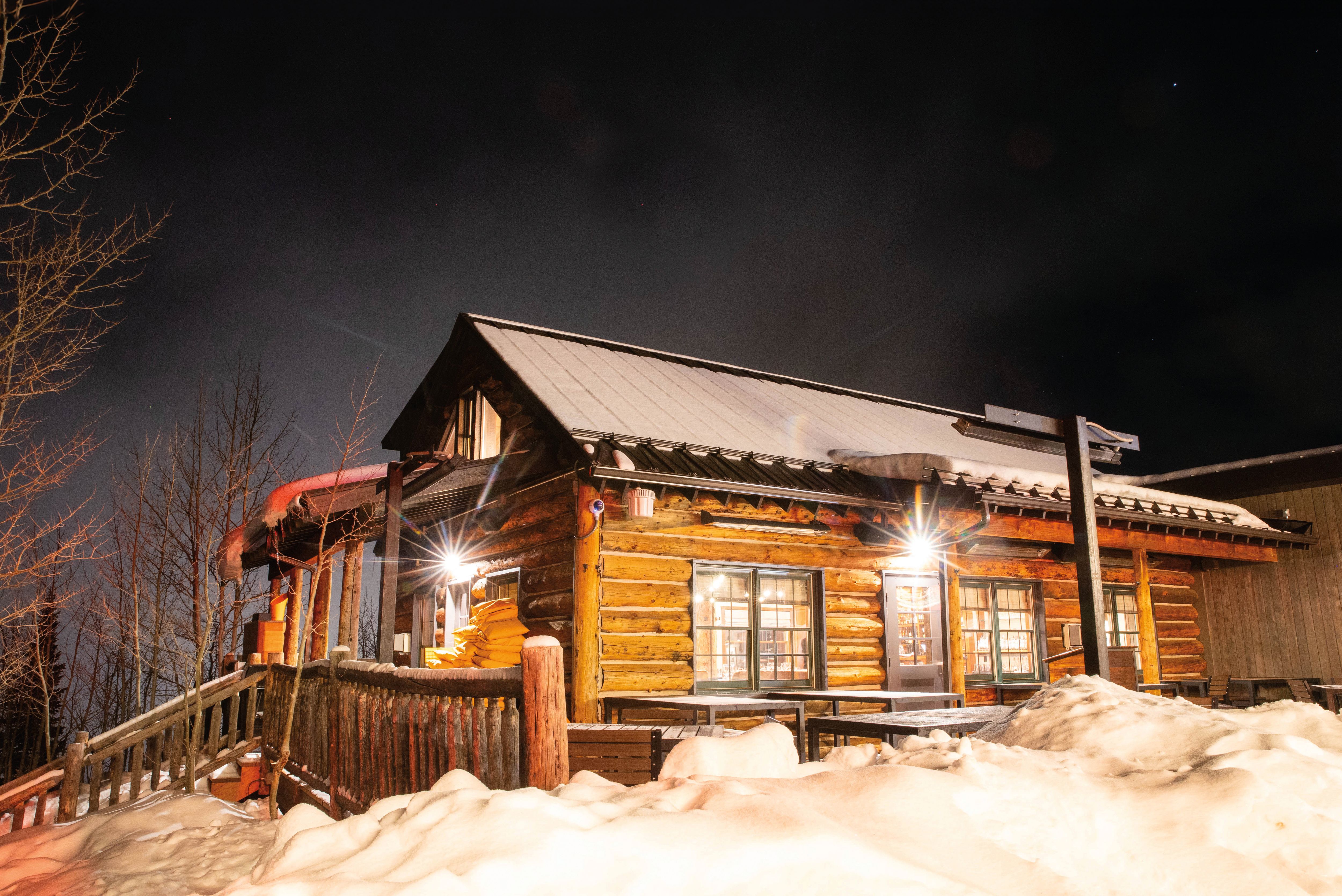
Located a dozen miles up Castle Creek Road just past Ashcroft (in 1883, during the Colorado Silver Boom, the ghost town rivaled Aspen in size and bustle), Pine Creek Cookhouse is a backcountry dining destination that feels a world away from downtown development. Originally built in 1971, then rebuilt after a 2003 fire, the handsome log cabin has floor-to-ceiling windows overlooking a frozen pond with vistas of the Elk Mountains and moose, eagles, and herons right outside. Hearty American alpine fare includes Rocky Mountain elk chop and ruby red trout. Accessible in winter only by a 1.5-mile snowshoe, snowmobile, or horse-drawn sleigh ride provided by Ashcroft Ski Touring (founded the same year as the first self-sustaining cross-country ski area in the US) and still without cell service, Pine Creek is one of those bucket-list dining expeditions that hasn’t changed much in decades. “It’s the 40th anniversary in my family,” says resort director Johnny Wilcox, who is launching a second-annual local ski week with free trail passes in January. “We’re proud to be one of the only adventure dining experiences in Aspen.” Open Dec 11, 2025, to April 5, 2026.
The Newer Guard
In a class of its own, Bosq Aspen maintains the only Michelin star in Aspen—or any mountain town in the state, for that matter—for the Colorado guide’s third year. Chef-owner C. Barclay Dodge, who grew up in Aspen, sharpened his skills in local restaurants before cooking abroad (including at elBulli in Spain), returning with worldly knowledge to run an early tasting-menu concept at his first restaurant, Mogador ( 2001 ). An intrepid forager, master preserver, and 2024 James Beard Award semifinalist for Outstanding Chef, Dodge presents our wild environs on creative tasting menus at Bosq, opened in 2016. Those seeking hyperlocal food know to book reservations well in advance to score one of 35 seats in the jewel-box dining room. This winter the restaurant’s alchemy only intensifies, evidenced by a glossy new feather in Bosq’s cap: Sommelier Nick Heilman earned the 2025 Michelin Sommelier Award for the Colorado Guide.
Who would think the best tacos in town are on the bar menu at Ellina Aspen? Locals sure do. When Ellina opened on Hyman Avenue in 2009, it then employed current owner Jill Carnevale as a server, sometimes a line cook, and sommelier (she bought the restaurant in 2018 ). Ellina’s Italian menu with housemade pasta (and those creative tacos) by founding chef Miguel Diaz, paired with an award-winning wine list, is worth celebrating.
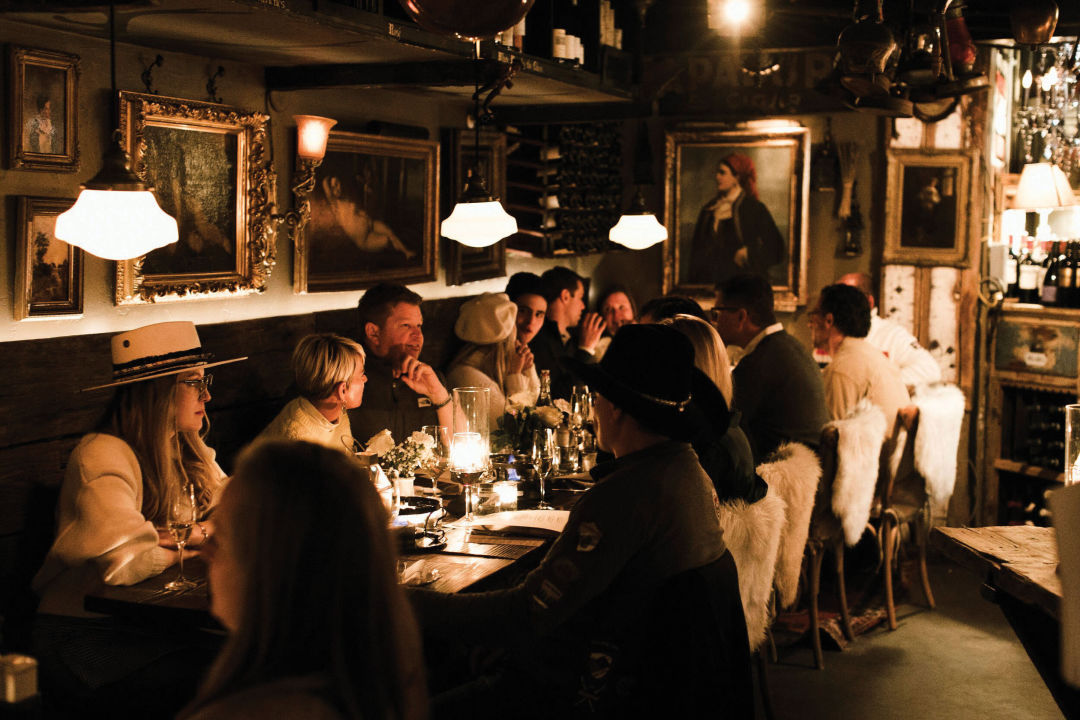
First opened with a menu of crêpes and fondue in 2011, French Alpine Bistro has evolved into an authentic Alpine chalet experience—the garden-level space is full of European antiques, and the award-winning wine list highlights regional gems. Austrian owner Karin Derly still serves a fabulous cheese fondue (and FAB’s invention, the crème brûlée crêpe), plus signature dishes (steak frîtes, truffle gnocchiflette, escargots in a silky tomato sauce) and lighter fare for lunch and dinner. Its reputation as “Most Romantic Restaurant” in national news media pairs nicely with local flavor, thanks in part to year-round happy hour ( 3–6 p.m.).

Image: courtesy Mawa's
Testament to the “unstoppable ambition” of owner and Executive Chef Mawa McQueen, Mawa’s Kitchen in the Aspen Airport Business Center has reached what she believes to be the restaurant’s full potential. What started as McQueen’s catering business in 2006 has blossomed into a Michelin-recommended restaurant combining the James Beard Award Semifinalist’s Ivory Coast heritage, Parisian upbringing, and hospitality career from Maine to the Rocky Mountains. Opening Mawa’s Kitchen in 2012, McQueen introduced Aspenites to native African specialties (fonio, fou fou, maafe); she made crêpes the post-ski, handheld power snack at the Crêpe Shack (now Crêpe Therapy Café, in Snowmass, Aspen, and Boulder). After more than a decade of hustle, McQueen reaps the rewards of dreaming a big Aspen dream.
Cheap Eats
The line has snaked out the door of the Big Wrap seemingly since opening day in December 1996. “It gets better every year,” says owner Barbara “Babs” Menendez, who turns out 500 to 600 wraps daily from a small yet efficient 720-square-foot kitchen. Given the average cost of an entrée in Aspen these days, how is she able to keep prices affordable—$8 breakfast, $12 regular wrap, before tax—after all this time? “Volume!” she quips. “And not being greedy. It is my way of giving back to the community that has supported me for 29 years.” Dependable, affordable, and unpretentious, the Big Wrap feeds cravings for freshness; the Pesto Wrapture, To Thai For, and Babs-e-que (with slow-cooked, shredded pork) are faves. This season, Menendez is boosting her selection of vegan soups, chili, and daily specials. Her secret sauce? “Making connections with our customers—knowing their names and what they like to eat; sneaking the kids candy and the dogs chicken bites.” Now that’s customer service. 970-544-1700
Since opening in 2005, Brunelleschi’s has been the go-to restaurant for families with kids (thanks to make-your-own pizzas with complimentary paper toques) and sports fans (owing to games always playing on big screens). Twenty years on, it maintains that lived-in mood, fueled by thin-crust pizzas, giant meatballs available à la carte, big bowls of pasta, $5 beer, and generous wine pours. Bruno’s, as it’s affectionately known, is one red sauce joint—among a horde of Italian restaurants in Aspen—that doesn’t change, because locals prefer it exactly as it is.
Stepping into the Grateful Deli is a trip: Open the red door and enter a psychedelic, 150-square-foot space with cloud-mural ceiling, a million stickers, and framed posters—an unofficial shrine to the Grateful Dead, with menu items referencing song titles and lyrics. Bought by a trio of Deadheads in 2007, the tiny delicatessen on Main Street has roots in stacked sandwiches going back to 1971—first as the Sub Shop, then the In & Out House, and finally the Upside Down House. Glenn Wood has run the place since 2016, and the Garcia (turkey, bacon, avocado, Provolone, lettuce, tomato, banana pepper, sprouts, mayo, a holdover from the Upside Down House menu and formerly known as the In & Out) remains the bestseller. Overstuffed sandwiches made on bread from Basalt’s Back Door Baking Company run $10-$14, including panini. The lunch line forms early, and the sandwich punch card survives. “We do retired sandwiches,” notes Wood, referencing the Trucker—turkey, bacon, cheddar, and barbecue sauce—a favorite at Johnny McGuire’s Deli, which closed a decade ago. “To me, it’s about face-to-face relationships. It’s a connection.”
“An affordable meal is becoming obsolete in this town,” says Paul Dioguardi, owner of Aspen’s Hickory House for about 30 years. The barbecue restaurant at Aspen’s S-curve entrance hasn’t changed its menu much since 1970—smoked ribs remain a staple for lunch and dinner—and one cook has been employed there for 34 years. “People know what they’re going to get when they come here,” explains Dioguardi, who says the restaurant modestly increased prices only twice post-pandemic. According to Dioguardi, fan favorites include fresh-cut and hand-dipped onion rings, four-cheese mac and cheese, housemade beans and coleslaw, and take-home sauces sold by the bottle. A recent remodel spruced up the 120-seat restaurant, which is popular for events—catering is a major part of the business. Community cred: Hickory House’s annual free charity Thanksgiving dinner is staffed entirely by volunteers, and the landlord donates all the turkeys to feed the hungry.
ASPEN's LATE-NIGHT, post-bars hangover helper, New York Pizza has been slinging pies upstairs on Hyman Avenue since 1993 (El Jebel and Carbondale opened in 2010 ). It’s the only pizzeria that delivers in Aspen proper, and the only post-midnight food joint, period. On any given evening, 1,000-day-pin ski bums, former mayors, and other local legends post up along the bar opposite the beer taps, scarfing slices. In fact, the shop’s only major change in recent years is widely approved: Credit cards are now accepted.
Since 1971, Poppycock’s (the closest thing to a diner in Aspen since Boogie’s shuttered a decade ago) has prided itself on scratch-made staples using cage-free eggs, house Hollandaise, and old-faithful oatmeal-buttermilk pancakes (the dry mix is available for purchase) in a no-frills environment just a block from the gondola. Originally founded as a crêperie, the modern iteration still serves crêpes and breakfast all day ( 7:30 a.m.–2:30 p.m.), plus lunch sandwiches and salads starting at 11 a.m.
When Troy Selby opened 520 Grill at 520 E Cooper Ave in 2010, he envisioned a modern Mexi-Cali menu featuring “grilled steak, corn tortillas, fresh ingredients, not Tex-Mex fried stuff,” having recently left La Cantina as executive chef when that restaurant closed. Though briefly rechristened Silverpeak Grill with the neighboring dispensary, the restaurant has reverted to its original name, and Selby’s menu of fish tacos, burgers (beef or bison), cheesesteaks, and chicken sandwiches lives on.
Local Bars & Clubs
“What’s the show tonight?” is an evening refrain. The sole venue dedicated to musical performances, Belly Up Aspen holds a capacity of around 450 concertgoers in a tiered configuration where nearly every spot in the house boasts a clear sightline to the stage. (Even better: The dance floor is always GA; reserved VIP seating occupies its own level overlooking the pit.) While nobody can ignore the ballooning costs of tickets with service fees, Michael Goldberg and sons David and Danny, who have owned the place since 2005, host low-cost shows (starting at $10 or $15 ) during offseason. The empire grows: Belly Up Aspen produces the annual X Games concerts, wintertime Palm Tree Music Festival (returning for the third year to Rio Grande Park, February 20–21 ), and last August’s inaugural Up in the Sky Festival at Buttermilk. In June, the venue opened a high-end Japanese restaurant, Yuki, and a private members’ club, Am7.
Honorable mention to a rare newcomer that captures the spirit of a legacy dive: BUCK (Bar Under Cooper Kitchen). Opened in 2023 in honor of the dearly departed Cooper Street Pier (itself 40 years old when it closed as Bad Billy’s in 2011 ) by the locals behind the Red Onion (closed since 2020 ) and Mi Chola (closed in September 2025 ), BUCK is the new go-to for $4 draft beers, $20 nightly specials such as fried chicken and prime rib, and sports or ski movies on the flatscreens.
Before longtime Aspenite and Meat & Cheese founder Wendy Mitchell sold her business to Infinite Hospitality in 2023, she offered Hooch employees a chance to buy the bar. This foresight has allowed the craft-cocktail joint to thrive without fear of corporate ownership diluting the good vibes. Hooch has the jams, original elixirs, cozy couches, and dim lighting to stoke a chill night out. Or, the back door gives easy access to the Sterling adjacent—talk about a power trip!
The last stop for social night owls on a tear around town, The Sterling is Aspen’s biggest black hole, hosting a steady mix of DJs as well as the occasional country show or band performance. Opened in 2022, the nightclub is really the next episode of Bootsy Bellows, which enjoyed three locations around town beginning New Year’s Eve 2013. A new sound system installed in June keeps The Sterling current, along with a hustling team of bartenders, bottle girls, and DJs. “We stay open with a skeleton staff during the offseason so locals have a place to go,” says owner Andrew Sandler. “I’ve got a ‘locals’ button on the POS.”

Image: Courtesy Photo
Many people don’t recall that Eddie Zane opened Zane’s Tavern first in Snowmass in 1997—nine years before Zane’s Tavern Aspen ( 2006 ). “We aren’t just a bar; we serve food, too—good food,” says the owner, who keeps the kitchen open until midnight, even at Zane’s Tavern Willits (opened in 2019 ). “I keep everything priced as fairly as I can.... No craft cocktails. Our faithful clientele and tourists don’t want a $100 steak every night. They wanna come in and watch sports.”
On Mountain
The most iconic breakfast in Aspen? That’s a gondola ride and a short schuss away, midway down Aspen Mountain at Bonnie’s Restaurant only open in winter. Owner Brigitte Birrfelder, who took the reins in 1998 from namesake Bonnie Rayburn, launched the plate-size oatmeal pancake phenomenon, which ends daily at 10:45 a.m. sharp. “We have to move to lunch; we can’t make a tuna melt on the same griddle as the pancake,” she explains. The grill slinging burgers and brats is a main attraction alongside Birrfelder’s all-scratch salad bar, soup bar, and bakery that turns out French bread, fluffy homemade pizza, fruit pie, cream pie, and Gretl’s original apple strudel (a recipe from ski racer Gretl Uhl, who established the restaurant in 1966 and ran it through 1980 ), enhanced by Colorado Rome apples ( 80-90 cases sourced each fall from Cedaredge). This season, one of the kitchen’s first master bakers returns to its 30-person team—he’d moved away but missed it too much. Meanwhile, Birrfelder’s daughter, Annika Nichols, carries on tradition, selling Bonnie’s famous oatmeal pancake mix onsite and online.