Aspenites Who’ve Made Their Mark at Winter Olympics
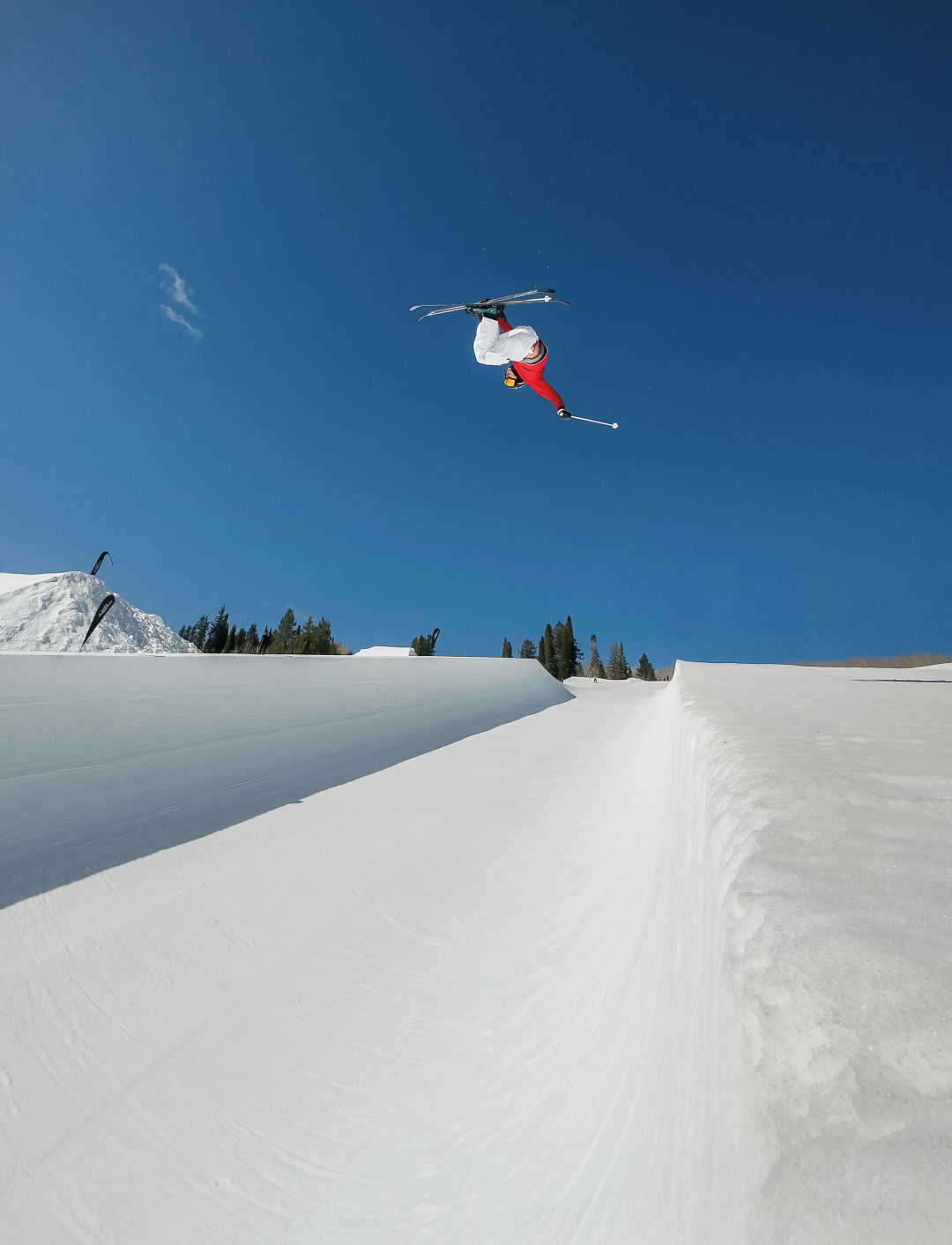
Image: Courtesy: Alex Ferreira
Since 1960, when Alpine skier Max Marolt went to the Olympics in Squaw Valley, Aspen has regularly sent skiers—and, as of 2006, snowboarders—to the Winter Games. Those athletes include silver medal snowboarder Gretchen Bleiler, bronze medal snowboarder Chris Klug, five-time Olympian Casey Puckett (who competed in both Alpine skiing and skicross), Alpine racers Beth Madsen, Wiley Maple, Bill Marolt (Max’s brother), Alice McKennis, Andy Mill, and Jake Zamansky; cross-country skiers Simi Hamilton, Noah Hoffman, Hailey Swirbul, and Craig Ward; and freeskiers Hanna Faulhaber, Alex Ferreira, and Torin Yater-Wallace. And there’s also figure skater Jeremy Abbott, a two-time Olympian who grew up in Aspen and started skating at the Ice Garden when he was four.
Three months before the 2026 Winter Olympics opened in Cortina and Milan, we spoke to six local Olympians, some of whom hope to be on the podium in Italy, about their snowsports journeys—from childhood aspirations to Olympic dreams realized. Bonus: They also shared their favorite local on-mountain spots and trails.
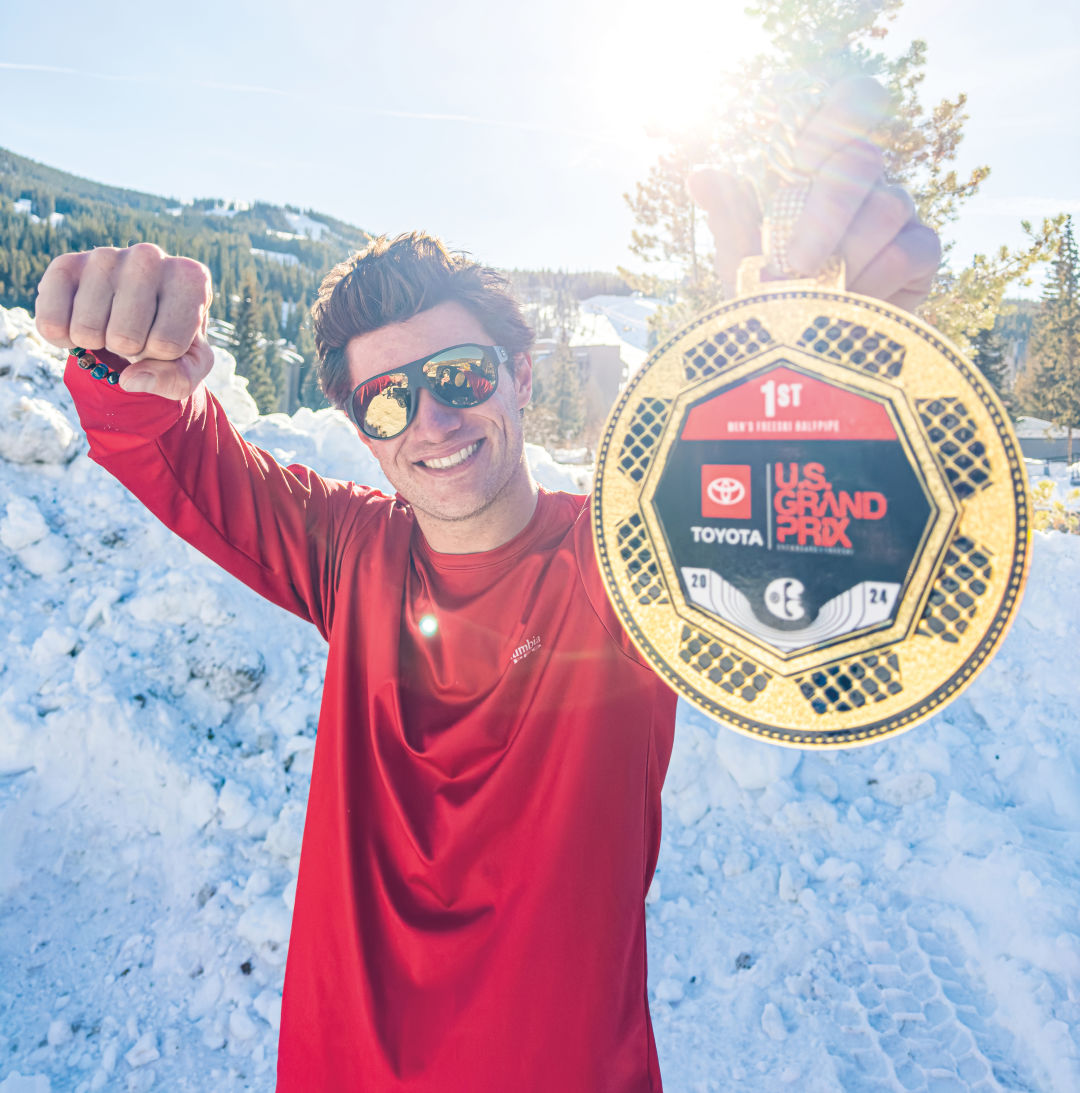
Image: Courtesy: Alex Ferreira
ALEX FERREIRA
Two-time Olympian and eight-time Winter X Games medalist Alex Ferreira currently reigns as Aspen’s highest-profile freeskier. After making an emphatic Olympic debut in 2018, winning silver in Russia, the half-pipe specialist won bronze in 2022 in China. Then in the winter of 2023–24, he won all seven competitions he entered, the only halfpipe skier to achieve a perfect season. All because he couldn’t sit still as a kid.
His parents enrolled their overactive youngster in weekend freestyle skiing sessions with the Aspen Valley Ski and Snowboard Club. He threw his first 360 at age 10 and entered his first event, an aerial competition at Aspen Highlands, because “my mom accidentally signed me up for it,” he recalls.
From there, Ferreira competed in moguls. Then one day in middle school, his friend Torin Yater-Wallace (who would also become an Olympic and X Games halfpipe skier) convinced him to skip school and ski at Buttermilk, where Yater-Wallace’s mom would video them in the halfpipe. As the boys threw tricks, Yater-Wallace encouraged his friend to do a 900 (two and a half revolutions). Says Ferreira, “I remember dropping in, closing my eyes, and landing a perfect 900. It was one of the most beautiful feelings I ever had. I decided right then I wanted to do halfpipe and switched to the park and pipe team.”
In 2012, as a junior at Aspen High, Ferreira was named to the US Freeski Team. Once halfpipe skiing was added to the Olympics in 2014, the Winter Games became his goal. Now, as he approaches his third Olympics (he’s already been named to the 2026 US team), Ferreira, 31, says a consistent highlight is mingling with athletes from around the world, “making connections with people you wouldn’t have met in a million years.”
Many of Ferreira’s fans also know his fictional alter ego, Hotdog Hans—an irascible, beer-swilling former freestyle champ who at age 85 still tears up the Buttermilk pipe. Donning layers of makeup, a fake beard, and always jeans, Ferreira portrays Hans with gusto in the six videos he’s made so far with friends. “I was pretty much acting like my grandfather, give or take,” Ferreira says. If the real Ferreira achieves his goal of Olympic gold in February, Hans will likely have some choice words about that in the next video. He might even tell Ferreira to just sit still.
Name: Alex Ferreira
Age: 31
Discipline: Freestyle skiing
Olympic creds: 2018 Winter Olympics (silver, halfpipe), 2022 Winter Olympics (bronze, halfpipe), 2026 US Olympic Freeski Team
Favorite Aspen ski areas: I live at the base of [Aspen] Highlands, so it’s a special place for me. Then Buttermilk.
Powder day go-to: The G Zones [in Highland Bowl] are unbelievable.
Other favorite Aspen Highlands trails: Suzi Q and Scarlett’s. And for just cruising, Apple Strudel.
Favorite terrain park: At Buttermilk, the park runs from the top to the bottom of the lift, and I enjoy the whole thing. I’ve been skiing it since I was 12 or 13, and I still love it. I have a lot of nostalgia for it.
Favorite ski area views: Certainly, the top of Highland Bowl, looking at Pyramid Peak and the Maroon Bells—it might be the best view in all of the world. Also, looking from the Cliffhouse patio, at the top of Buttermilk, over the Maroon Creek Valley to Pyramid Peak.
If you could do another Olympic sport, what would it be? Trampoline or badminton, maybe even tennis.

Image: courtesy US Ski & Snowboard
HANNA FAULHABER
When halfpipe skier Hanna Faulhaber went to the 2022 Winter Olympics in China, at only 17 years old, “I had to pinch myself to make sure I wasn’t in a dream,” she says. Then again, she was only 14, a freshman at Basalt High School, when the US Freeski Team recruited her to compete in halfpipe after seeing her ski at nationals.
On skis since age 2 1/2, Faulhaber began competing in moguls with the Aspen Valley Ski and Snowboard Club but switched over to the pipe and park team at age 10 or so. “I realized I only liked the moguls because of the jumps,” she says.
In 2021, Buttermilk hosted the halfpipe, slopestyle, and big air events of the biennial FIS Freestyle Ski and Snowboard World Championships—a last-minute venue change from China during the pandemic. Faulhaber spun and flipped her way into fourth place, the top American female finisher. “I shocked and surprised myself,” she says. “It was the first time in a competition that I realized, ‘Wow, I can really go somewhere with this.’” The Olympics then became her goal, though she didn’t anticipate going to them the very next year.
“It was tough being super young and not having family or friends to support me there,” Faulhaber says of the COVID-affected Olympics, “but I had great teammates, and a huge highlight was just to be there and experience it.” This time, as she aims to make the 2026 US Olympic team, she hopes to be hugging her family at the bottom of the pipe.
But first, Faulhaber, 21, will need to ensure her skiing is solid. In January 2024, she tore the ACL, MCL, and meniscus on her right knee while training at Buttermilk and had to sit out the rest of the season. Then, at last January’s Winter X Games, she had what she calls a “weird landing” in the pipe and tore cartilage in her left knee. After a month of training in New Zealand this fall, she reports feeling good. Meanwhile, the level of competition among women halfpipe skiers continues to soar. “Everyone’s runs are cleaner and more well executed, with a lot more amplitude,” Faulhaber says.
And then there’s Shaun White’s new Snow League, which debuted last spring at Buttermilk for snowboarders and which welcomes skiers this season. Faulhaber got an invite and is excited to spend even more time in her local halfpipe this winter.
Name: Hanna Faulhaber
Age: 21
Discipline: Freestyle skiing
Olympic creds: 2020 Winter Youth Olympics (bronze, half-pipe), 2022 Winter Olympics (sixth place, half-pipe)
Favorite Aspen ski areas: I love them all. They’re all very different. Snowmass is so versatile—you can get anything you want, whether the [terrain] park, big mountain, or beginner runs. Buttermilk is looked at more as a beginner area, but you can get some sleeper powder runs there, or you can park easily and get in a few quick groomer laps. Plus, I train there a lot. Aspen Highlands has fun steeper terrain. And Aspen Mountain is great because you can go for a quick morning lap and then get down and go into town.
Current terrain focus: With my return to snow from injury, I’ve learned how to carve a little better, so I’m enjoying some steeper groomers on all the mountains.
Favorite lunch spots: I love to go to Bonnie’s and get apple strudel. I also like going to Buttermilk Mountain Lodge [formerly Bumps] and sitting outside in the sun. And the Big Wrap is a staple for a smoothie or a burrito. You’ll catch me in there once a week.
If you could do another Olympic sport, what would it be? Rugby. My mom is a Kiwi, so I grew up watching it.
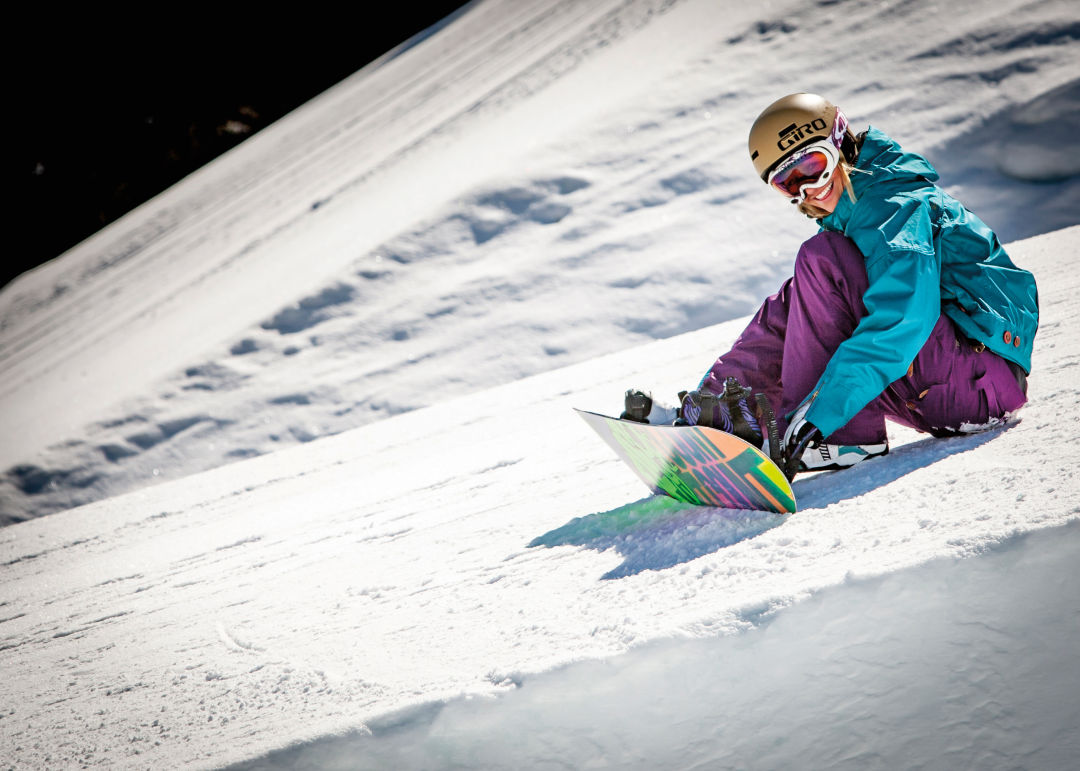
Image: Matt Power
GRETCHEN BLEILER
“I’ve been on quite a journey, and I’ve learned a lot from it,” says Gretchen Bleiler as she reflects on her career as one of the most successful competitive snowboarders in the United States. Indeed, the two-time Olympian has experienced the heights of success (winning an Olympic silver medal and four Winter X Games golds) and the lows of post-competitive life. In a well-received speech to Aspen High graduates last May, she shared what it’s like to wrestle with dark emotions and come out the other side.
Bleiler moved from Ohio to Aspen with her family at age 10; already a skier, she learned to snowboard at age 11, then started competing five years later, working toward her biggest goal. “Since I was 7, I wanted to become an Olympian,” says Bleiler. She didn’t even have a specific event in mind. Growing up in an athletic family, “I felt most authentic and myself when I was participating in sports,” she adds.
She eventually focused on snowboarding because of its counterculture image. “I loved that it was about style and self-expression and community and camaraderie,” she explains. She homed in on the halfpipe after graduating from Aspen High and was named to the US Snowboard Team in 2001, when she was 20. And then she had to learn to get out of her own way. “The expectations that I put on myself were a block between me and snowboarding at my potential,” she explains.
A standout Olympic moment is “one that most people don’t know about,” Bleiler says. With some time before the halfpipe finals in 2006, Bleiler, teammate Hannah Teter, and coach Rick Bower went for a few powder laps. They lost track of time and got back to the venue just before the last practice round. “We all consciously made this choice to not let the results be more important than the actual spirit of what we were doing,” Bleiler recalls. Teter won gold, Bleiler silver.
Her life blew up after that, with TV appearances, magazine covers, a signature outerwear line, and environmental advocacy. She also suffered multiple concussions and other injuries, leading her to retire from competition in 2014. A few years later, Bleiler recalls, “I lost all sense of my world and who I thought I was. It all crumbled around me.”
She got divorced and confronted mental health challenges. Eventually, she studied spiritual psychology at the University of Santa Monica. Today, at 44, as a transformational coach and keynote speaker, Bleiler helps others learn from their own journeys.
Name: Gretchen Bleiler
Age: 44
Discipline: Snowboarding
Olympic creds: 2006 Winter Olympics (silver, halfpipe), 2010 Winter Olympics (11th place, halfpipe)
Favorite place to be on a powder day: I’ll go out and hike [and ride] Highland Bowl.
Favorite run on a non-powder day: I’ll usually skin up Tiehack on my splitboard and take my one run down.
Best way to conduct business: Instead of meeting at a coffee shop, we’ll meet in the gondola at Aspen Mountain, then take a quick lap down, top to bottom, however we choose.
Terrain park nostalgia: I don’t ride halfpipe anymore. [A while ago] I was riding with [fellow Olympian] Elena Hight when she was in town. At that point, I still felt very connected and rode at a level I was familiar with, but I hadn’t been riding a lot. Coming down the backside wall of the pipe, I caught my heel-side edge, which was weird, and had a horrific fall. In that moment, I realized, ‘I can’t fall like this anymore.’ I also realized that if I wasn’t riding every single day, I should probably just put it away. There’s kind of a sadness these days [when I see the halfpipe]. It’s like we can’t be together anymore; we can only see each other from afar.
If you could do another Olympic sport, what would it be? I’m good [as is]. I could say surfing, but I wouldn’t want to go to the Olympics for it—I’d want it to stay pure.

Image: courtesy wiley maple
WILEY MAPLE
The path that 2018 Olympian Wiley Maple has taken has had as many twists and turns as the downhill and super G races he specializes in. From an early age, he wanted to become a professional athlete and go to the Olympics. But it wasn’t until high school, after growing up in Aspen “playing every sport I could get my hands on,” he says, that he decided to focus on Alpine ski racing. “I can’t quite remember when I fell in love with skiing,” he admits. “In some ways, it was a slow burn.”
One thing he knows for sure: the Aspen Valley Ski and Snowboard Club had a lot to do with it. Maple credits his unanticipated victory in the end-of-season race for Ridge Runners, a youth program at Aspen Highlands, for igniting his interest in racing, which he then continued through the club’s competitive division. “My two best friends and I became skiers over those years, skiing first lift till last, until we collapsed at Stapleton Sports to recap the day,” he says.
In 2008, Maple was named to the US Ski Team, then was on and off it over the next decade, battling injury, pain, and inconsistent results. But he kept racing, covering his own costs as an independent athlete, including at the 2018 Olympics, where he finished 30th in the downhill. After a two-year retirement, Maple underwent a spinal fusion and, remarkably, returned to elite racing in late 2022.
“In short, by myself, I perform every task of a national team,” says Maple, 35, of his continued independent status. “Fundraising, finding sponsors, managing, planning, tuning, training, and competing.” Among the challenges is finding courses to train on; he relies on other national teams willing to share their venues.
Why keep at it? Maple admits a level of stubbornness. “In many ways, I remain in the sport to prove that it can be done through alternative avenues—and to reject someone telling me that I can’t do something,” he says. He also wants to use his career as a platform to share the effects of climate change that he regularly sees as a mountain athlete.
On the brink of this season, Maple continues to follow his own course, with the 2026 Olympics as a goal. “It’s a David-versus-multiple-Goliaths story,” he says. “I’m attempting to compete against well-funded Formula One teams with a tricked-out Honda Civic held together with duct tape and baling wire that I built in the garage. It’s only competitive because of the passion I put into it.”
Name: Wiley Maple
Age: 35
Discipline: Alpine skiing
Olympic creds: 2018 Winter Olympics (30th place, downhill)
Favorite Aspen ski area: Aspen Mountain is the crown jewel for a reason. It’s the only mountain in the world that I’ve been to where you can mix and match an east face with a west face and a north face in the same run. The change in elevations and aspects allows you to find the best skiing quickly. And every friend you’re skiing with can take a different run and still meet at the gondola at the same time. Kristi’s to Jackpot has been my favorite combination for a long time.
Powder day go-to: It’s hard to beat Deep Temerity [at Aspen Highlands] and [Highland] Bowl when the lines are short and the powder is deep. Highlands definitely has the best side country when it’s safe enough to get out there.
Favorite on-mountain eats: Bonnie’s [on Aspen Mountain] is the only place for lunch or breakfast. But if I’m on Highlands, the Alehouse is an excellent treat.
If you could do another Olympic sport, what would it be? Hockey—it has speed, precision, and a splash of violence that ramp up the intensity. Other than that, the hundred-meter dash; few sports are so pure, simple, and elegant.
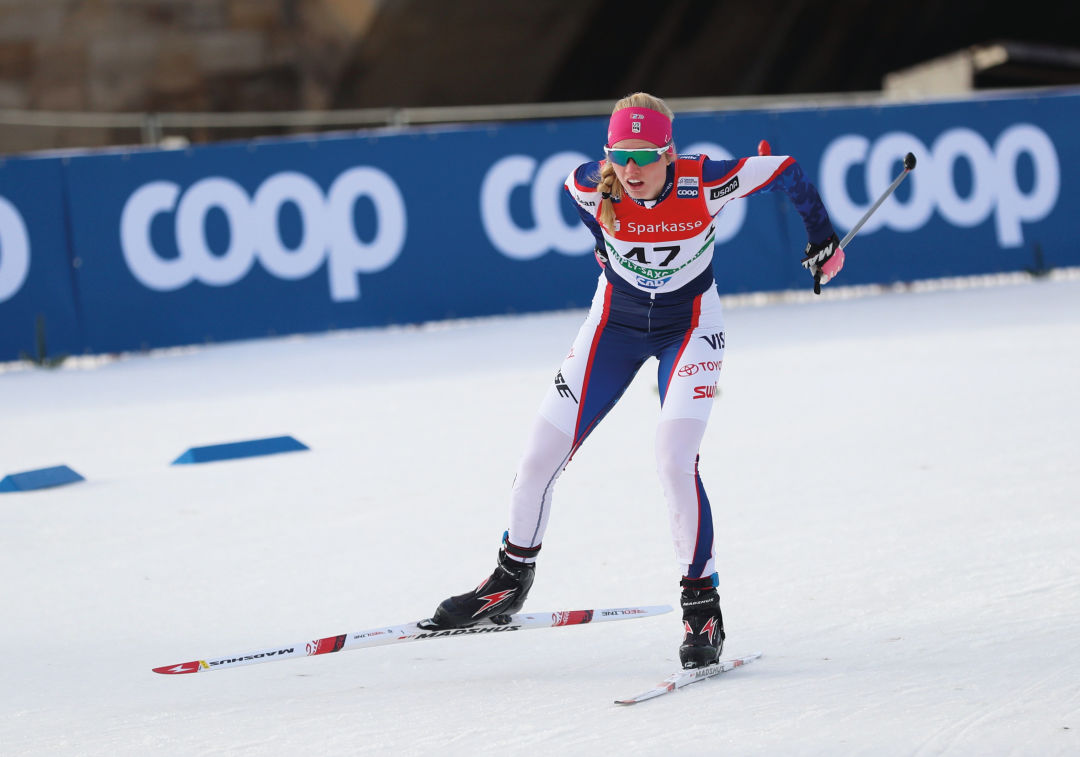
HAILEY SWIRBUL
In 2023, after five years on the US Cross-Country Ski Team and racing at the 2022 Winter Olympics in China, Hailey Swirbul retired from competition—or so she thought. “I was ready to experience other things,” she says. “I really wanted to prioritize my relationships and being in one place and my mental health. I also wondered what life outside of skiing would be like.”
It’s no surprise she welcomed a break. Growing up in Basalt as part of an athletic family, Swirbul started Nordic ski racing when she was in fifth grade and soon began racing mountain bikes, too (her older brother, Keegan, is a professional road cyclist). She appreciates cross-country skiing for its blend of art and athleticism. “It’s so beautiful and graceful to watch someone really competent,” Swirbul explains. “I like the motion of it, and the healthy lifestyle. Plus, as a kid, it felt really good to be good at something.”
When she was 12, Swirbul set a goal of being on the US Cross-Country Ski Team; she was selected for it in 2018, during her sophomore year of college at the University of Alaska at Anchorage.
Over the past couple of years, Swirbul has worked as a civil engineer, coached Nordic skiing at Alaska Pacific University in Anchorage, and, last winter, ski patrolled at Aspen Highlands. She also earned her private pilot license. And now? As of August 2025, she’s attempting a comeback to elite-level racing. “It was refreshing to have taken some steps away and then become part of the ski community again,” she says.
First, Swirbul, 27, will have to earn a starting spot in World Cup races. That journey begins in early December with the start of the US SuperTour race series; the women’s and men’s leaders after the first four races will then get World Cup starts. As for another shot at the Olympics, that team will be named in January, based on the season’s results so far. (Her top 2022 Olympic finish was sixth in the women’s 4x5-kilometer relay.)
“I’ve been trying to approach this from a place of curiosity rather than a place of pressure and expectations,” Swirbul says. She credits that change in mindset for a new appreciation of competitive skiing. “I think I took it for granted, because it was all I ever knew,” she admits. “But being a professional skier is a really sweet job.”
Name: Hailey Swirbul
Age: 27
Discipline: Cross-country skiing
Olympic creds: 2022 Winter Olympics (6th place, 4x5km relay; 32nd place, 10km classic style; 40th place, skiathlon)
Favorite local Nordic trail system: I’ve skied all over the world, and Spring Gulch [near Carbondale] is still one of my favorite trail systems. The variety of terrain is unique, and the narrow trails feel very intimate. It can feel remote even when you’re not that far from the parking lot. And I really like how you can do a long, sustained climb if you loop the trails in the right way. My favorite part of the whole trail system is North Star, with the big aspen trees.
Best trails for a challenging workout: The [Aspen] High School trails are good-quality skiing. I love classic skiing, and if I want to have a good classic ski workout, I’ll go there and ski the inner loop up to Raoul’s.
Best trailside views: Paul’s Point at Spring Gulch. I always like to take a breath there and take in the view of Mount Sopris. That mountain is so grounding for me. I also like the panoramic view from the top of Clubhouse Hill at the High School trails, of the valley and the mountains.
Favorite ski snack: Trader Joe’s Scandinavian Swimmers
If you could do another Olympic sport, what would it be? Mogul skiing
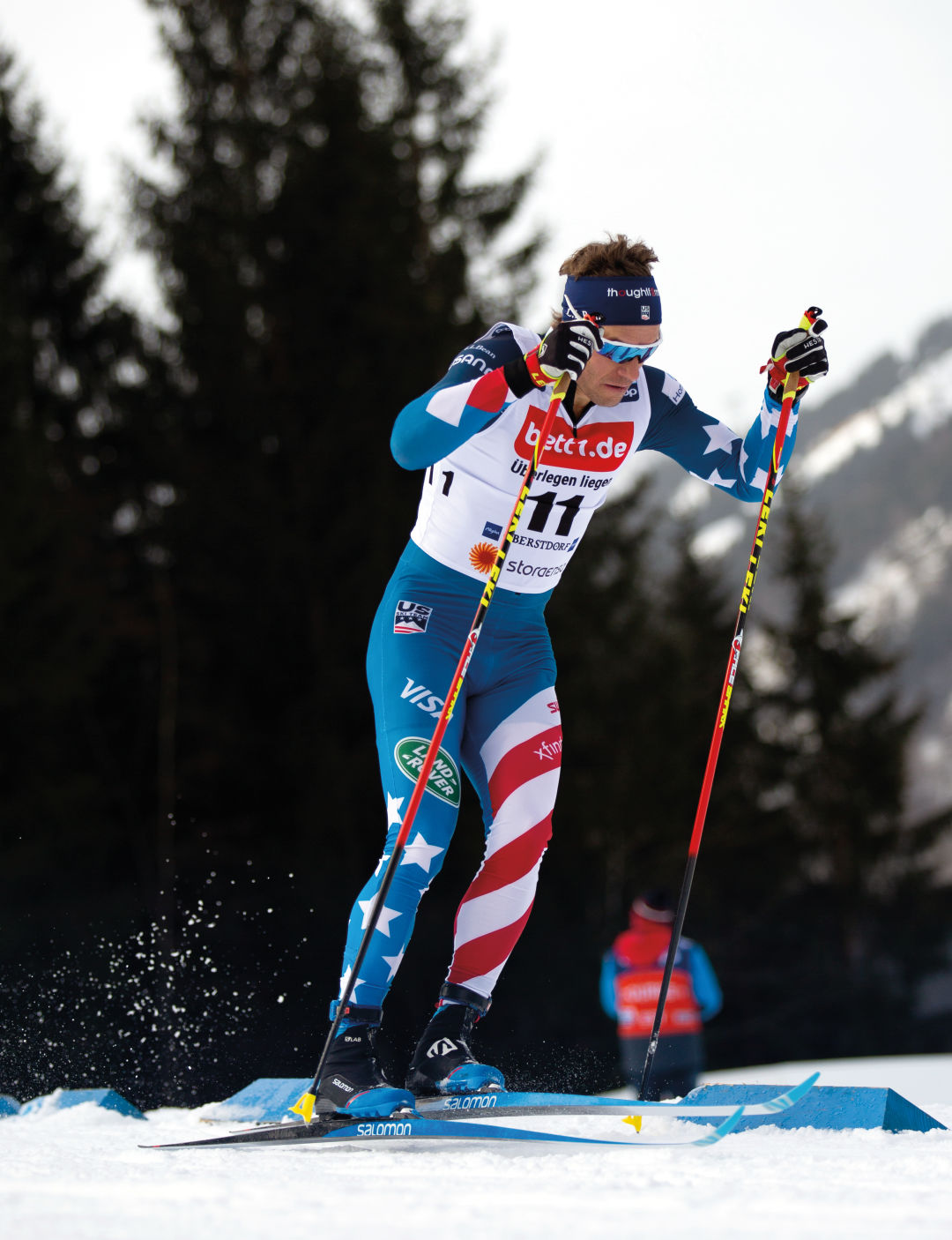
Image: courtesy US Ski & Snowboard
SIMI HAMILTON
“From a pretty early age, it was clear I had a good engine,” says three-time Olympic cross-country skier Simi Hamilton, who credits his aerobic prowess to genetics and an active childhood in Aspen. With a dad who ran ultramarathons and a mom who was a middle-distance runner, he and his family mountain-biked, hiked peaks, and skied together. Hamilton—whose grandfather, D.R.C. Brown, helped establish Aspen Mountain as a ski area, then later ran the Aspen Skiing Corporation for 22 years—started Nordic skiing more regularly in the fifth grade and committed to elite competition as a high schooler.
Another family activity: watching the Olympics, summer and winter. When Hamilton started finding success in Nordic ski races—he qualified for the junior nationals at age 14—he thought, “If I continue training hard and developing, there’s a good shot at going to an Olympics.” Indeed, after graduating from Middlebury College in 2010, Hamilton was named to the US Cross-Country Ski Team, a few months after he had already competed as part of the US Olympic contingent in Vancouver, British Columbia. He skied in two more Olympics, in 2014 and 2018, and retired from the US team in 2021.
Hamilton’s favorite Olympics were in 2010. “I made the team two weeks before the games started,” he recalls. “Everything happened so fast, I was a little like a deer in the headlights, but in a good way. And so many family members and friends booked last-minute tickets to come and watch.” On the other end of the spectrum were the Olympics four years later in Sochi, Russia. Hamilton started the men’s freestyle sprint as a favorite to medal but snapped a ski pole in funky snow conditions at the start of one of the quarterfinals. “It was total heartbreak,” he says. “I had just won a World Cup race in Switzerland, and my fitness was at its peak.”
These days, Hamilton, 38, lives in Basalt with his wife, Sophie Caldwell Hamilton (also an Olympic cross-country skier), daughter Lilly (age 3 ), and son Lowell (who will be 1 year old in February). And his engine still runs strong. Hamilton leads skiing and rock-climbing outings as a full-time guide for Aspen Expeditions and coaches part-time in the Nordic and ski mountaineering programs for the Aspen Valley Ski and Snowboard Club, inspiring the next generation of Olympic hopefuls.
Name: Simi Hamilton
Age: 38
Discipline: Cross-country skiing
Olympic creds: 2010 Winter Olympics (13th place, 4x10km relay; 29th place, sprint classic; 64th place, 15km freestyle); 2014 Winter Olympics (6th place, team sprint classic; 11th place, 4x10km relay; 27th place, sprint freestyle), 2018 Winter Olympics (6th place, team sprint; 20th place, sprint classic)
Favorite local Nordic trail system: Spring Gulch holds a special place in my heart. It’s nothing fancy, but there’s an amazing community feel, and the skiing is incredible, with rolling terrain and a backdrop of Mount Sopris. Skiing up there is the closest you can get to riding [a mountain bike] on good singletrack through the sagebrush.
Best single-trail experience: Owl Creek Trail. That experience of being able to ski between Aspen and Snowmass is so special. You ski through beautiful aspen groves on the Snowmass side, and you can take Terminator, one of the coolest downhills in the valley, to the start of Owl Creek. Later, you cross Buttermilk, skiing past the rails and tabletops in the terrain park, then hit the Oregon Trail [at the ski area], where a classic track is sometimes set. You can ski all the way to the ARC [Aspen Recreation Center].
Favorite trailside view: The view from Finlandia at Spring Gulch—that’s everyone’s favorite. You spend awhile climbing, then get up high and spin in the right direction, and all of a sudden, you’re just staring at Mount Sopris, which has almost 7,000 vertical feet of elevation.
Favorite way to refuel after a long ski: I usually ski with a Snickers bar in my pack, and it’s the first thing I eat afterward.
If you could do another Olympic sport, what would it be? Ski mountaineering [which will be introduced at the 2026 Winter Olympics]