Three Local Design Firms That Put Aspen Public Spaces on the Map

Image: Michele Cardamone
From downtown landmarks like the Hotel Jerome and the pedestrian malls to stately Victorian West End residences and the Aspen Institute’s Bauhaus-inspired campus, architects have shaped this city’s built environment perhaps more than any other profession. Here, the principals of three local firms talk about what drives them to dedicate time and talent to design Aspen’s civic and public spaces, and why that work matters.

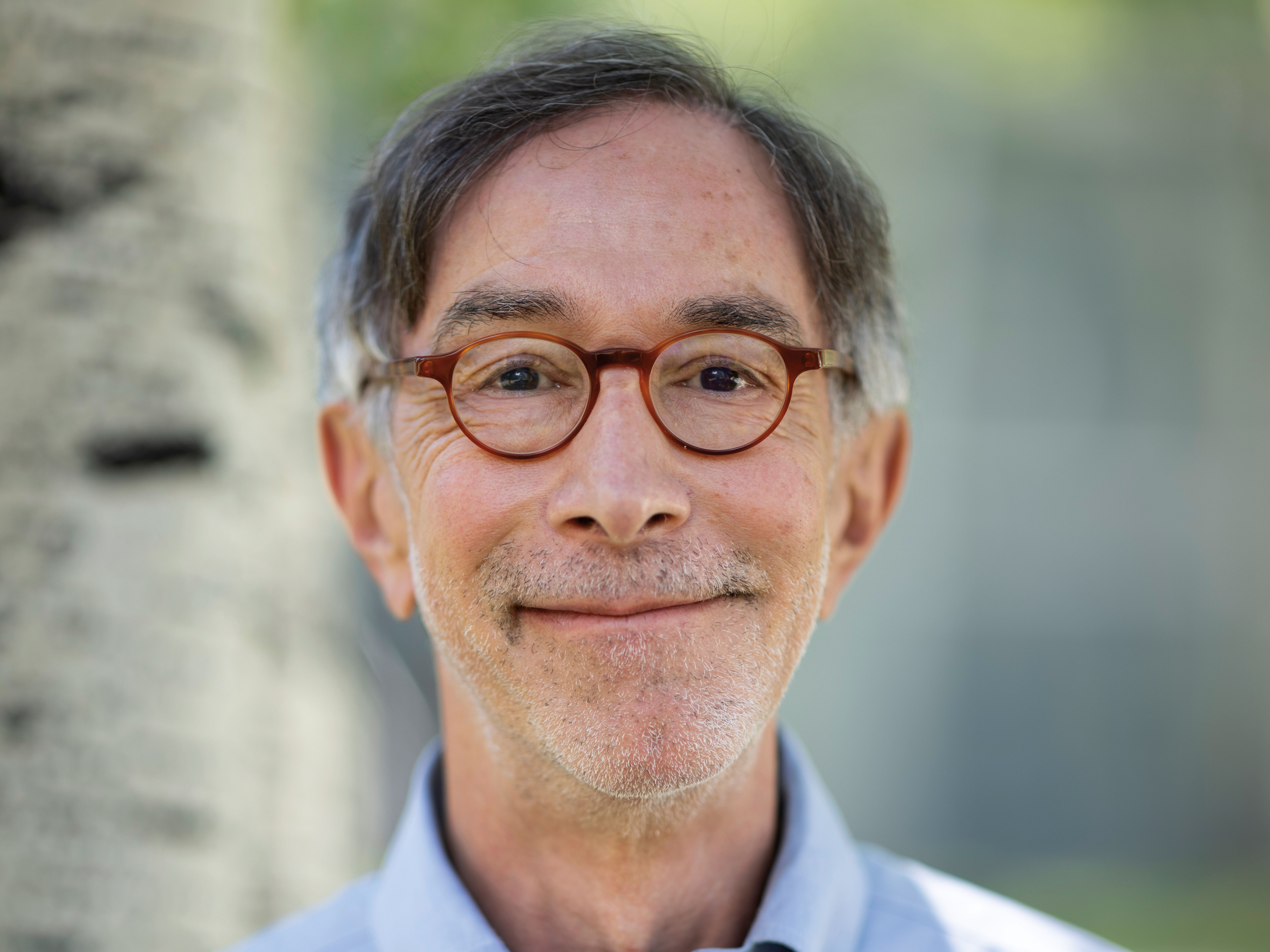
Harry Teague
The architect who designed the Aspen Music Festival and School’s (AMFS) two major performance venues likens his work to classical music. Harry Teague compares designing homes to composing chamber music: The work is intimate, selective to a particular theme, private, and sometimes experimental. On the other hand, he argues, designing civic and public architectural spaces is more like composing a full orchestral piece.
“Public buildings are bound by responsibility to the community,” says Teague, whose namesake firm celebrated its 50th anniversary in 2025. “It’s a collective thing. You have to synthesize all the input. And your piece is going to be experienced by lots of people over a long period of time.”


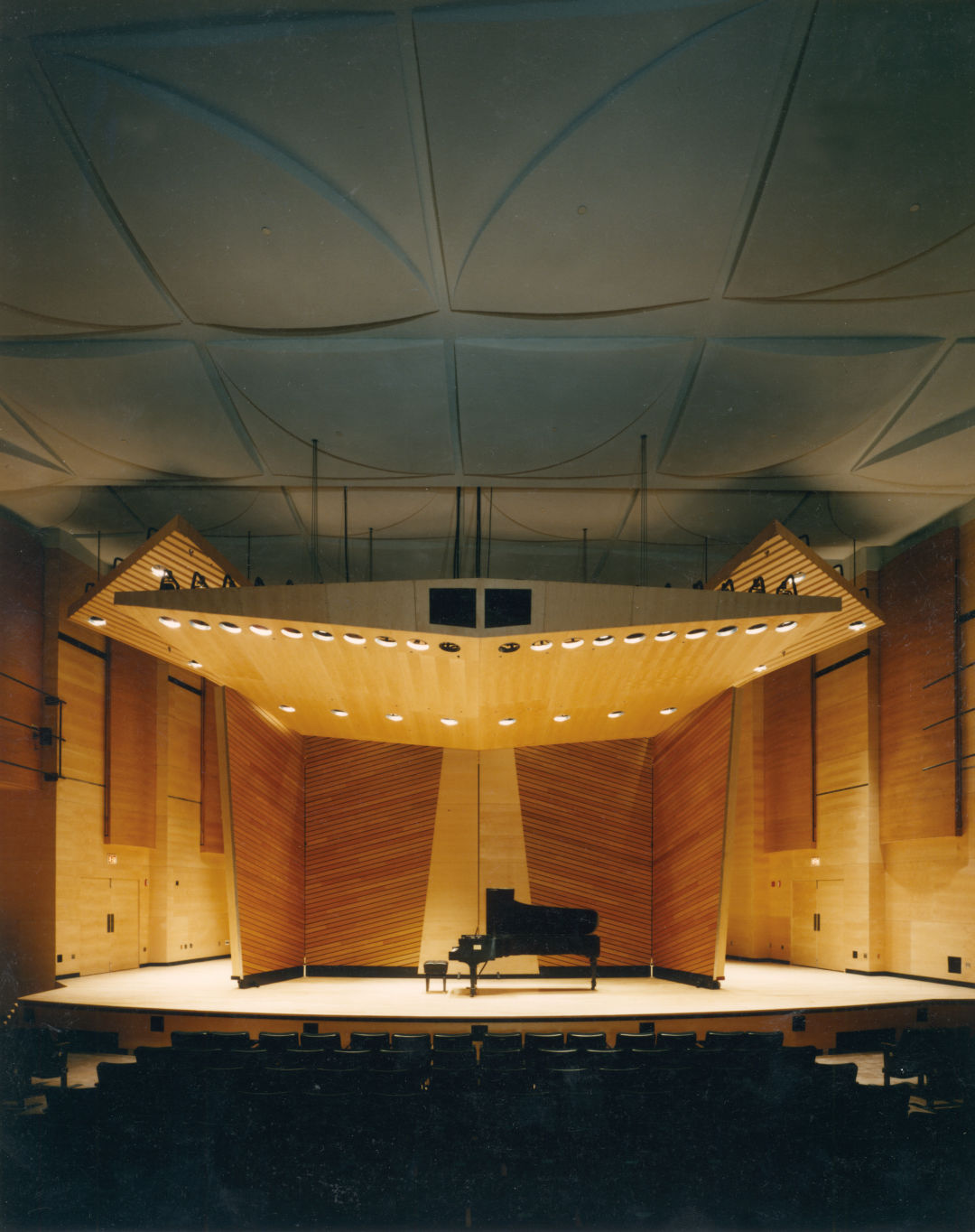
In addition to the Harris Concert Hall and the Klein Music Tent, Teague is the architect of record responsible for some of the Aspen area’s most beloved cultural, living, and educational spaces: Anderson Ranch, Aspen Center for Physics, Basalt’s River Center, multiple affordable housing projects, the Bucksbaum Campus of AMFS, Aspen Country Day School, Colorado Mountain College (CMC) Aspen, and the original Aspen Community School and current Carbondale Community School.
Aspen Community School was Teague’s first local civic commission. After studying with Fritz Benedict in the late 1960s while in architecture school, Teague became intrigued by how educational spaces impact the brain, and he offered to design and build the school as his thesis project. With the blessing of and funding by philanthropist George Stranahan (the Community School’s founder), Teague and a student crew of 25 idealistic young people camped on the Woody Creek mesa during the summer of 1970, building the school out of logs salvaged from a forest near the ghost town of Lenado for a total of $90,000—$10 per square foot. The design was centered on a space akin to a village square (although it was more like the hub of a wheel), with classrooms radiating outward from it, separated by garage-like doors that could open to become larger communal spaces when need arose. The school was a hit locally, and its radical design was replicated all over the world.
Work on the Community School “absolutely influenced the rest of my life in that architecture actually can matter, that the design of a building affects how people relate to each other,” says Teague. “It’s not about style, but about human behavior. A building can either prevent interaction or encourage interaction—and when and where it does that is really important.”
Teague used the Community School design as a template, with tweaks, for other projects. The campus of CMC Aspen revolves around a central community area with wings extending off the central core. Administrative offices and lecture halls at the Aspen Center for Physics are connected by an outdoor plaza: a corridor with alcoves and open seminar rooms encourages interaction and cross-pollination of ideas, which physicists from around the world say is a major reason they travel to Aspen to this day. Even Anderson Ranch Arts Center, with its eclectic mix of restored and repurposed ranch structures, has an intentional, radiating design. A central activity zone for each of the Ranch’s creative disciplines is surrounded by roughly concentric circles containing spaces for administration, dining, and housing. Again, garage-like doors and a deliberate circulation pattern encourage artists of all disciplines to mingle and collaborate, and they also enable students and campus visitors to observe the creative process without being intrusive.
“That centralized space that is conducive for connection really works,” says Teague.
The spoke-and-hub concept is perhaps most apparent in the design of the Klein (formerly Benedict) Music Tent, which debuted in 2000. Improving on structural, acoustic, and aesthetic features of its previous iteration, Teague’s radial design allows the musicians to see and hear each other properly. Replacing dark, disruptive curtains with louvers that easily and quietly open and close allows listeners on the lawn to see what’s going on inside and musicians onstage to take in the extended audience, as well as changing weather and scenic views of the mountains. Adding to the drama, the translucent tent fabric animates the shadows of aspen leaves rustling in the breeze.
Preserving a relationship between the inside and the outside while bringing people together is what Teague says makes the space successful.
“When you sit down, you’re looking across at the orchestra but also at other audience members,” he observes. “You’re instantly part of a community.”

In general, Teague notes, civic and public work present the architect with more challenges than private commissions. But he says that’s a good thing. In designing the joint Aspen Country Day School and AMFS Bucksbaum Campus on Castle Creek Road, Teague’s team had to mitigate multiple hazards, from avalanches and landslides to wildfires and floods, as well as integrate the 22 buildings (some of which were over 100 years old and dilapidated) with the landscape and ensure that the spaces function well for both organizations. He believes that was achieved with a design that honors history and nature and encourages interaction.
“I think good architects thrive on constraints,” says Teague. “These are problems that then guide you. It doesn’t preclude the idea of having poetry in your work.”
It’s not lost on Teague that the high-end homes he designs for the one percent allow him to pursue the civic and public commissions that serve the other 99 percent, including affordable housing work, which, he says, is desperately needed.
“My reward is that these [projects] can affect everything from government to education to making art,” he says. “They matter.”
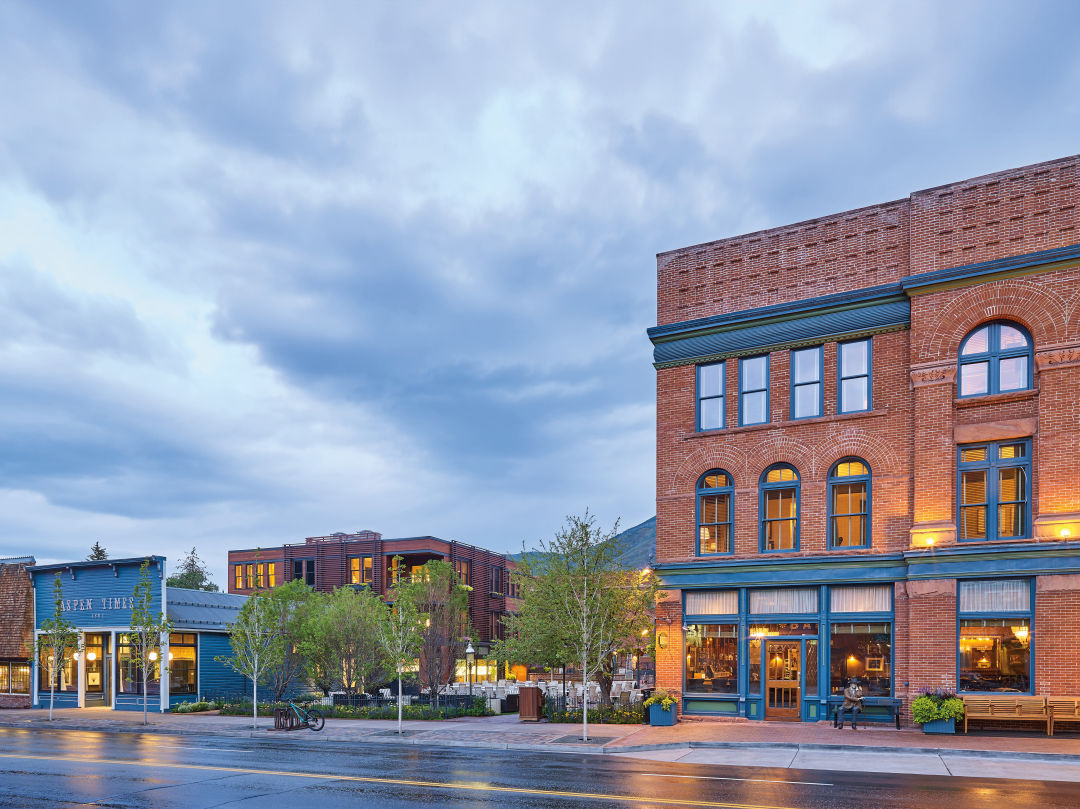
Image: Shawn O'Connor
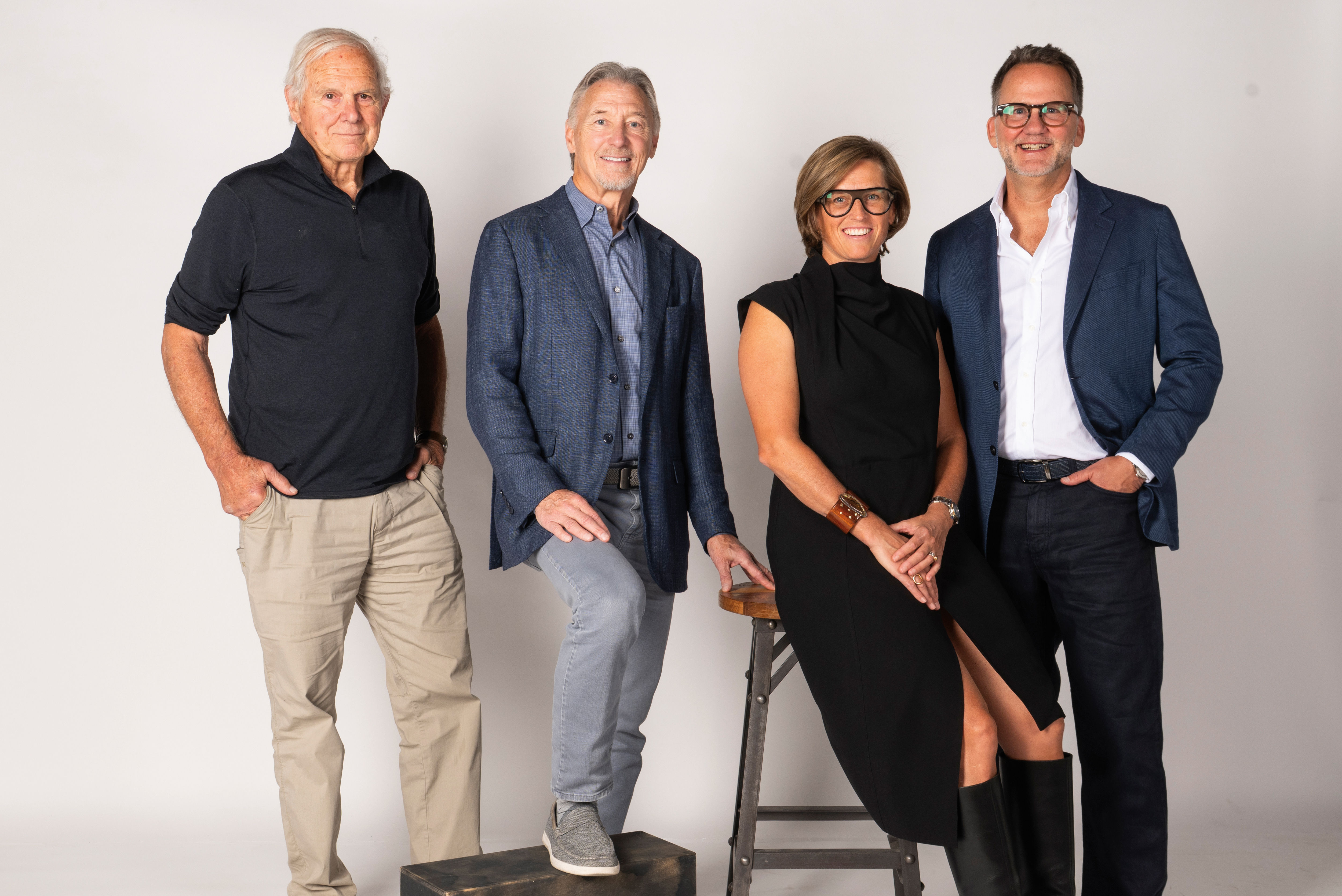
John Rowland and Sarah Broughton
One can point to the 50-plus downtown buildings that John Rowland and Sarah Broughton have worked on as evidence of their commitment to both preserving the past and ensuring the future of Aspen’s built environment. But just as critical is Rowland+Broughton’s civic and public service.
In 2016, the firm was hired to help the City of Aspen rewrite its commercial design guidelines. Continuing as a trusted advisor to this day, they recently beta-tested and gathered feedback on the city’s new energy code. Broughton, who served on Aspen’s Historic Preservation Commission for eight years, sits on the city and county boards of adjustment, which deal with land-use code complaints. Rowland served on the city’s Planning and Zoning Commission.
“We’ve given back in different ways, not just by singular projects,” says Rowland, adding that their involvement on multiple government and nonprofit boards is “probably the most civic of all.”
Rowland and Broughton are married and reside in the West End. They work together in a gorgeously restored landmark building on Main Street that bears the couple’s initials. Much of the firm’s commercial portfolio revolves around signature downtown spaces that might be considered Aspen’s public living rooms, from restaurants like Matsuhisa and White House Tavern to inns like the W and Hotel Jerome.

Image: Brent Moss

Image: Brent Moss
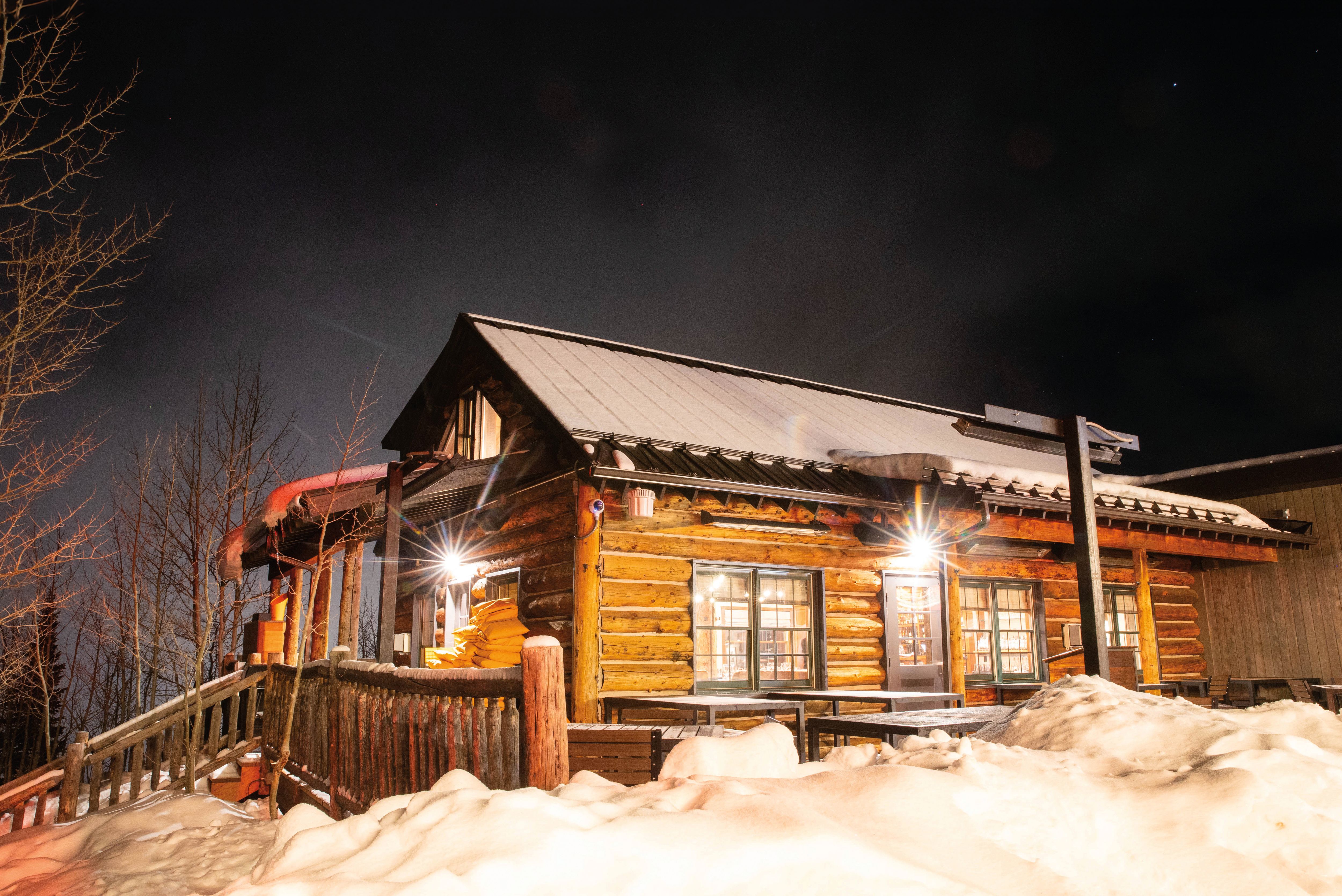
For the latter, a national and local historic landmark, R+B completed a full interior renovation in 2012, including redesigning the flow of the public spaces, but only after conducting a thorough historic analysis to understand what should be preserved. They redid the courtyard to better function as a public space and turned the old Aspen Times building (also federally landmarked) into the Jerome’s cocktail lounge, Bad Harriet. “That’s a great example of a project that we probably spent eight years working on, at different stages, to really make sure that it shines for our community,” says Broughton.
For Rowland and Broughton, historical renovation, which represents 60 percent of the firm’s work, is a specialty and a passion. A demonstration of this commitment, the couple purchased (taking advantage of the city’s historical preservation incentives, using a lot-split sale as collateral for a bank loan) and transformed the Victorian-era Mesa Store Building on Main Street (a former general store built in 1889 that most recently was used as a yoga studio) into R+B’s showcase headquarters, improving it to outlast their firm’s tenure there.

Image: lisa romerein
More recently, after successfully petitioning the 1970s-era Boettcher Building on the Aspen Institute campus to be included in the city’s historical landmark inventory in 2020, R+B enclosed its interior courtyard and improved the building’s energy efficiency by 600 percent. That success led to the firm being chosen as the architect of record for the Institute’s new Resnick Center for Herbert Bayer Studies next door. Working with lead architect Jeff Berkus, the couple shepherded the project through the city’s land-use process. Completed in 2022, the museum serves as the most public-facing building on campus, a welcome center of sorts that, in addition to housing the Institute’s Herbert Bayer collection, invites visitors to explore more of Bayer’s works throughout the campus.
“We practice a convergent way of designing, where we are holistically designing. We’re thinking about architecture and landscape and interiors, and we’re collaborating with other artisans, makers, and designers,” says Broughton. “So, working on Herbert Bayer’s buildings, we feel very aligned, because that was his way of designing.”
In addition to a commitment to historic preservation, another R+B hallmark is sustainability, arguably the other side of the same coin.
“We don’t even ask; we just build it into the design,” says Rowland.
“It’s not a menu item,” adds Broughton. “It’s how we’re thinking.”
They see their firm’s legacy as helping tell Aspen’s story through work that speaks to its history and future.
“We set out with every project to understand how it’s impacting everything around it,” says Broughton. “We’re thinking about the broader community and the context. We’re very relational, and there’s a relationship to our community with every project.”
For R+B, the secret sauce is preserving what makes Aspen special.
“Not everything needs to be knocked down,” Rowland adds. “Not everything needs to be new and shiny. I think it’s what sets [Aspen] apart. There’s very few places you can go to ski and you get the context of the historic town that used to be here. Otherwise, it’s just another resort.”

Charles Cunniffe
Charles Cunniffe Architects is associated with a staggering number of civic and public projects—over 40 if you include a handful of mixed-use and nonprofit buildings in Aspen and several government and housing projects around Telluride and Ouray. Local projects include many government buildings, three fire stations, and plenty of affordable housing.
Civic design is baked in for Charles Cunniffe, who worked on seven hospitals and three airports while in college. In the late ’70s, he was invited to Aspen to work on a Hotel Jerome remodel. He stayed, then branched out on his own in 1980, remodeling several downtown commercial storefronts.
Cunniffe’s civic work is central in Telluride, where the firm oversaw the reconstruction of the 1970s-era Town Park Festival Stage, home of signature events like the Telluride Bluegrass Festival. In Ouray, the firm worked for decades to plan and secure funding for an $8.2 million historic restoration of the Ouray County Courthouse, a 19th-century landmark where John Wayne was filmed in a pivotal courtroom scene in True Grit in 1968. Locally, the most meaningful are projects involving people and organizations that are as passionate about what they do as he is. These include the Mountain Rescue Aspen’s headquarters (which he designed pro bono), the JAS Center (he’s a founding board member of Jazz Aspen Snowmass), and Coffey Place, a Snowmass workforce housing project named for its former housing director, the late Joe Coffey.
“As I look back at these projects, the spirit of the working relationship and the success of the outcomes had a lot to do with the people involved,” Cunniffe says.
Civic and public projects are often complicated, due to strict budgets, decisions made by committee, and drawn-out timelines. Yet despite these and other challenges and the generally lower financial incentives, Cunniffe still gladly takes them on.
“Anyone can give money to an organization, but if I can donate time and services, I think the impact can be a larger one,” says Cunniffe, who serves on 11 boards. “As an architect, I feel the obligation to help an organization with its physical environment, so that organization can thrive.”
Cunniffe’s pro bono work on the current Theatre Aspen tent in John Denver Park helped establish a temporary home for the nonprofit. He’s now working on a permanent structure, with improved landscaping so that it fits better into its setting.
One of his favorite projects is the nearby Rio Grande Park restrooms were built of the site “and in quite a beautiful way,” he says, adding that one of his goals is to ensure buildings look like they belong where they are, and that “the neighborhood is enhanced because of it.”

That’s also the case with the new Aspen City Hall, on the other side of Rio Grande Park. Despite delays, a lawsuit, and other issues that necessitated “too many compromises,” Cunniffe says he is pleased with the end result.
“Civic buildings are meant to embody community pride," he says. “They should stand apart and not be constrained by the same restrictions as standard zoning, because they belong to everyone.”
No stranger to projects with controversy, Charles Cunniffe Architects is the local firm working on the new Aspen/Pitkin County Airport terminal (along with Portland, Oregon–based firm ZGF). Guided by recommendations that came out of a two-year-long public process, Cunniffe hopes to design a building that is environmentally sustainable, healthy for employees, and a pleasant experience for those who use it. “How can the traveling public interface with the building, coming and going with ease, comfort, and maybe a little joy?” he asks.
Cunniffe says the airport is one of the better examples of the importance of doing meaningful architectural work. “That’s going to affect a tremendous number of people for years to come. It’s a serious undertaking, as it is our community’s first impression, and we treat that with great respect.”
That sentiment is equally, if not more, true when it comes to designing local affordable housing. In addition to Coffey Place, other projects include city housing connected to the new police department on Main Street, affordable housing in Willits, housing in the Snowmass and Basalt fire stations, and multiple renovation projects for the Town of Snowmass Village’s housing department.
“It’s not merely a box to put someone in,” he says. “I believe that the more thoughtful you can shape a living environment, the happier and healthier the occupants will be, and the more they’ll be able to contribute back to their community.
“Coming to Aspen had a profound impact on me, and the welcoming spirit of this town is something I cherish,” he adds. “I want to help maintain Aspen’s unique character, and by putting in that extra commitment, I feel like I’m essentially, earning my keep.”